
 Čeština
 Français
 Deutsch
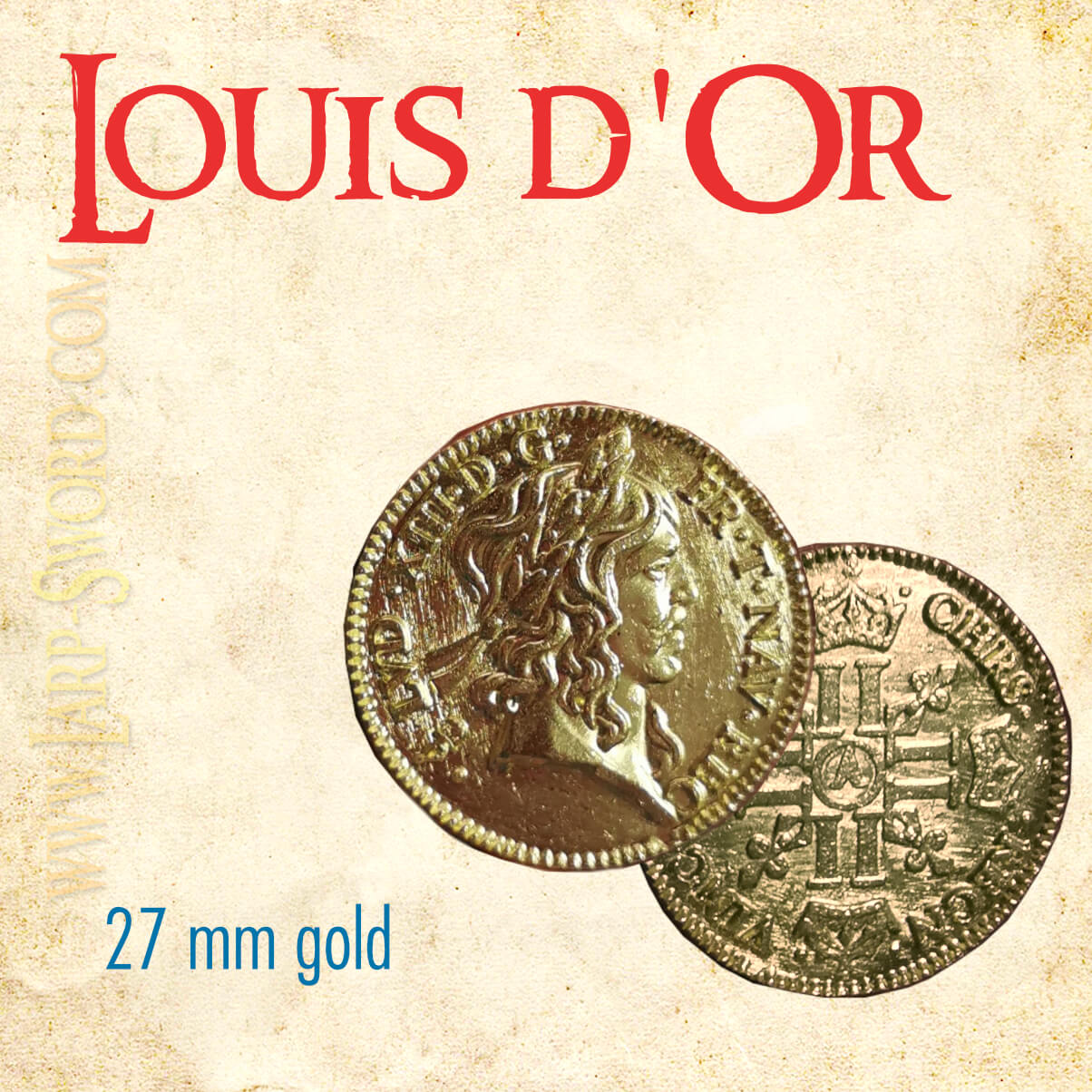


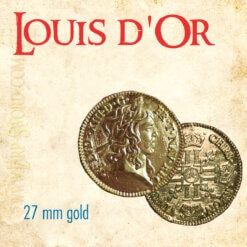


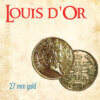
Louis d’Or – Three Musketeers Coin
Price range: 19 Kč through 9.000 Kč
Louis d’Or – Three Musketeers Coin
A replica of the famous French gold coin Louis d’Or, inspired by the mintings from the reign of Louis XIII–XVI. An iconic coin associated with the court, musketeers, nobility and intrigues of the early modern period.
For more than two centuries, the Louis d’Or was one of the most prestigious coins in France. It bore the image of the reigning king and became a symbol of royal power, wealth and court life. We know these coins from the novels about the Three Musketeers, from stories about duels, intrigues, secret conspiracies and magnificent balls.
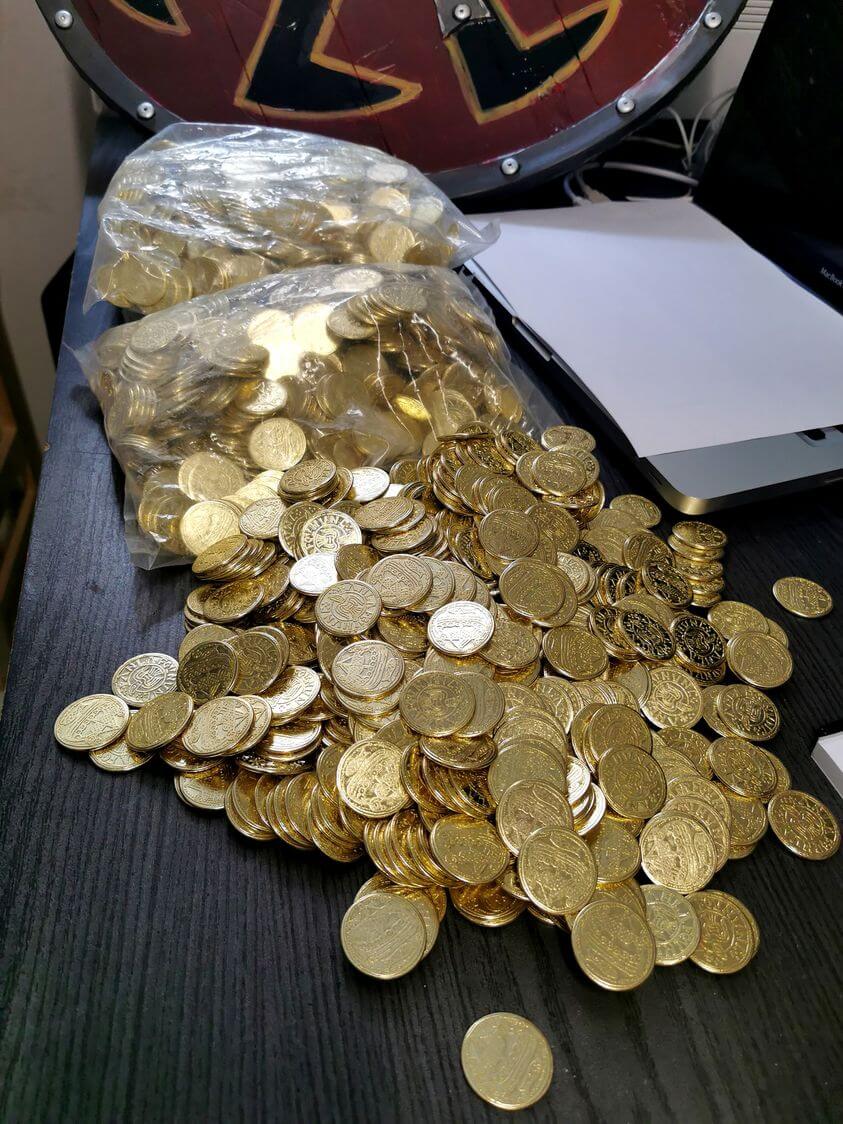
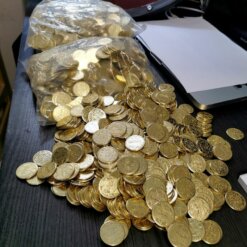
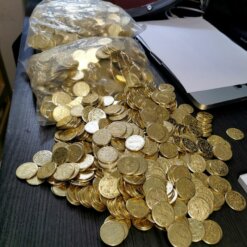
This metal replica is intended primarily for LARP, RPG and historical games as game currency or props. Thanks to its distinctive relief, it looks authentic both in a purse and when handed over as a reward, bribe or ransom.
Features
Size: 27 mm
Weight: 4g
Material: Zinc alloy
Color: gold
Description
Louis d’Or – Three Musketeers Coin
A replica of the famous French gold coin Louis d’Or, inspired by the mintings from the reign of Louis XIII–XVI. An iconic coin associated with the court, musketeers, nobility and intrigues of the early modern period.
For more than two centuries, the Louis d’Or was one of the most prestigious coins in France. It bore the image of the reigning king and became a symbol of royal power, wealth and court life. We know these coins from the novels about the Three Musketeers, from stories about duels, intrigues, secret conspiracies and magnificent balls.
This metal replica is intended primarily for LARP, RPG and historical games as game currency or props. Thanks to its distinctive relief, it looks authentic both in a purse and when handed over as a reward, bribe or ransom.
Features
Size: 27 mm
Weight: 4g
Material: Zinc alloy
Color: gold
Who is it suitable for
Historical LARP (17th-18th century)
Musketeer and fencing themes
City and court campaigns
Film and theatre props
Three Musketeers Coins
It was said that a real musketeer never carried more than three Louis d’Or:
one for wine,
one for the night,
and one for a bribe in case he was not found in the morning.
For centuries, the Louis d’Or was a symbol of royal power, courtly luxury and dangerous intrigue. Coins that traveled through the pockets of musketeers, nobles, gamblers and spies. Each piece could mean a night full of wine – or the beginning of a duel to the death.
The Louis d’Or became a symbol of both rapid wealth and rapid ruin – today in a gentleman’s pocket, tomorrow on a gambler’s table, the day after tomorrow in the palm of a mercenary.
The king had his image on the coins so that everyone could see whose power was behind the gold. It was said that whoever held the Louis d’Or held the word of the king in their hand. That is why these coins were often used in secret negotiations, diplomatic agreements and hidden payments to spies.
Louis d’Or vs. Écu
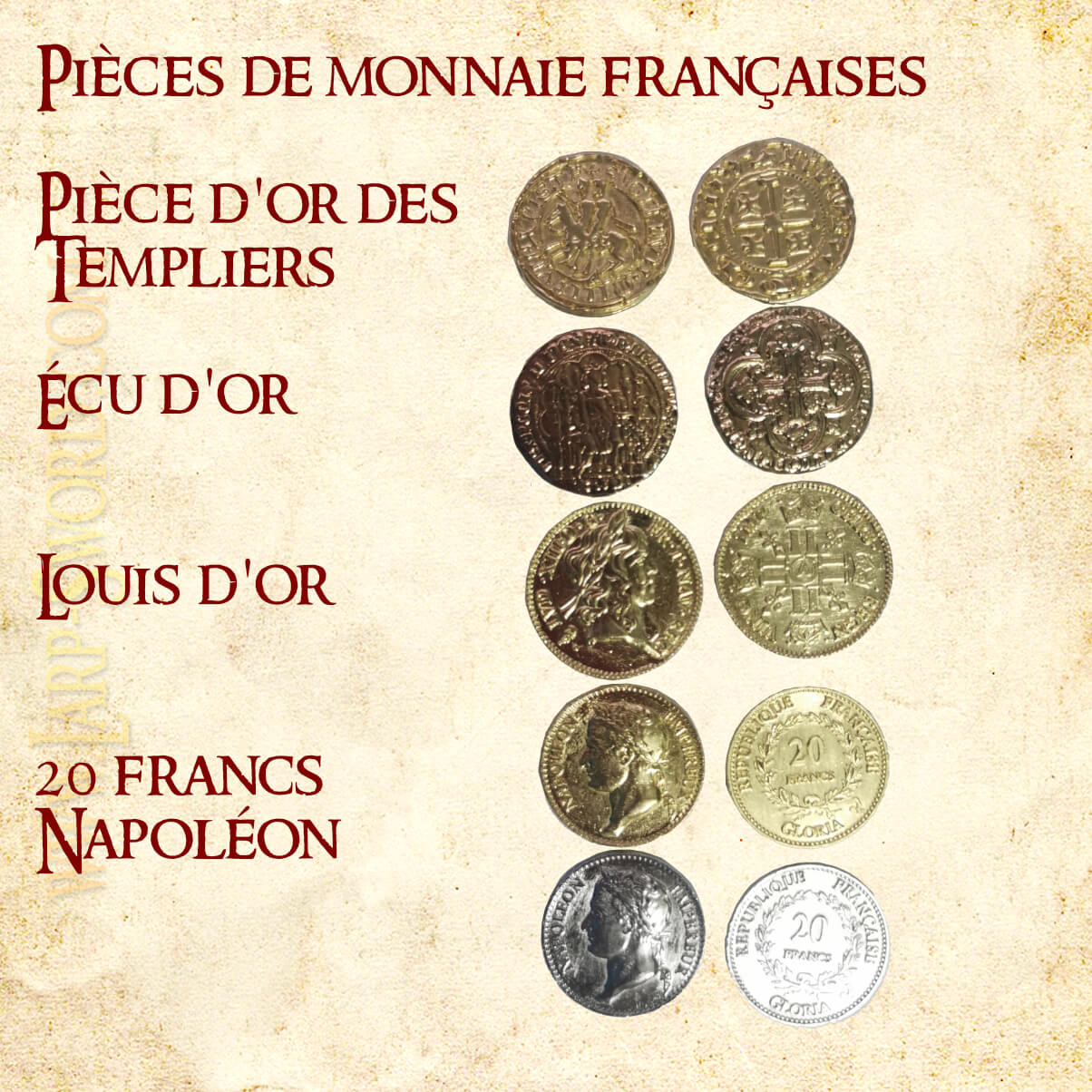
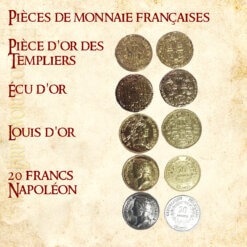
Before 1640, France had its main gold coins called Écu d’or (gold écu). The name “écu” came from the word shield (the coin had a coat of arms).
The turning point came in 1640 under Louis XIII. Louis XIII carried out a major monetary reform.
Two new basic coins were created:
Louis d’Or (gold)
Écu d’argent (silver)
Louis d’Or It was not the first coin in France named after a monarch in history, but it was the first to introduce this name systematically and in the long term. Louis d’Or was the first truly mass-used French gold denomination named directly after a king. From that moment on, the name “Louis” became a mark of prestige.
Serrated / modified edge
Louis d’Or was struck by machine (milling presses) instead of by hand hammer.
This allowed for a precise circular shape, a truly precise uniform weight, and later a decorated or serrated edge. The first pieces from 1640 still often had a smooth edge, but by the reign of Louis XIV. (ca. 1660+) commonly features serrations, edge inscriptions, and ornamental edges
With the introduction of the Louis d’Or in 1640, France moved towards a modern concept of coinage – uniform weight, machine minting, and gradually decorated edges to prevent metal from being cut. The coin thus became a symbol not only of royal power but also of technological progress. The Louis d’Or was not the first coin in the world to feature a serrated edge (England and Italy had experimented earlier), but it was the first mass-produced French coin to adopt this protection as standard.
Additional information
| Weight | 4 g |
|---|---|
| Color | Gold |
| Množství v balení | 1 pc, 10 pcs, 100 pcs, 1000 pcs |
| Žánr/období | 16th-18th century, Pirates and buccaneers |
| Materiál | zinc aloy |
| Použití | Cosplay, Film, Soft larp, Toy, Board Games, Collector's Item, RPG, Škola, Souvenir, Tábory a akce s dětma |
| Průměr | |
| Kompatibilní světy | |
| Estetika | Faithful replica |
Related products

Jewelry and bijouterie