
 Čeština
 Français
 Deutsch
-
×
 Gladius hispaniensis
1 × 1.200 Kč
Gladius hispaniensis
1 × 1.200 Kč
 Gladius hispaniensis
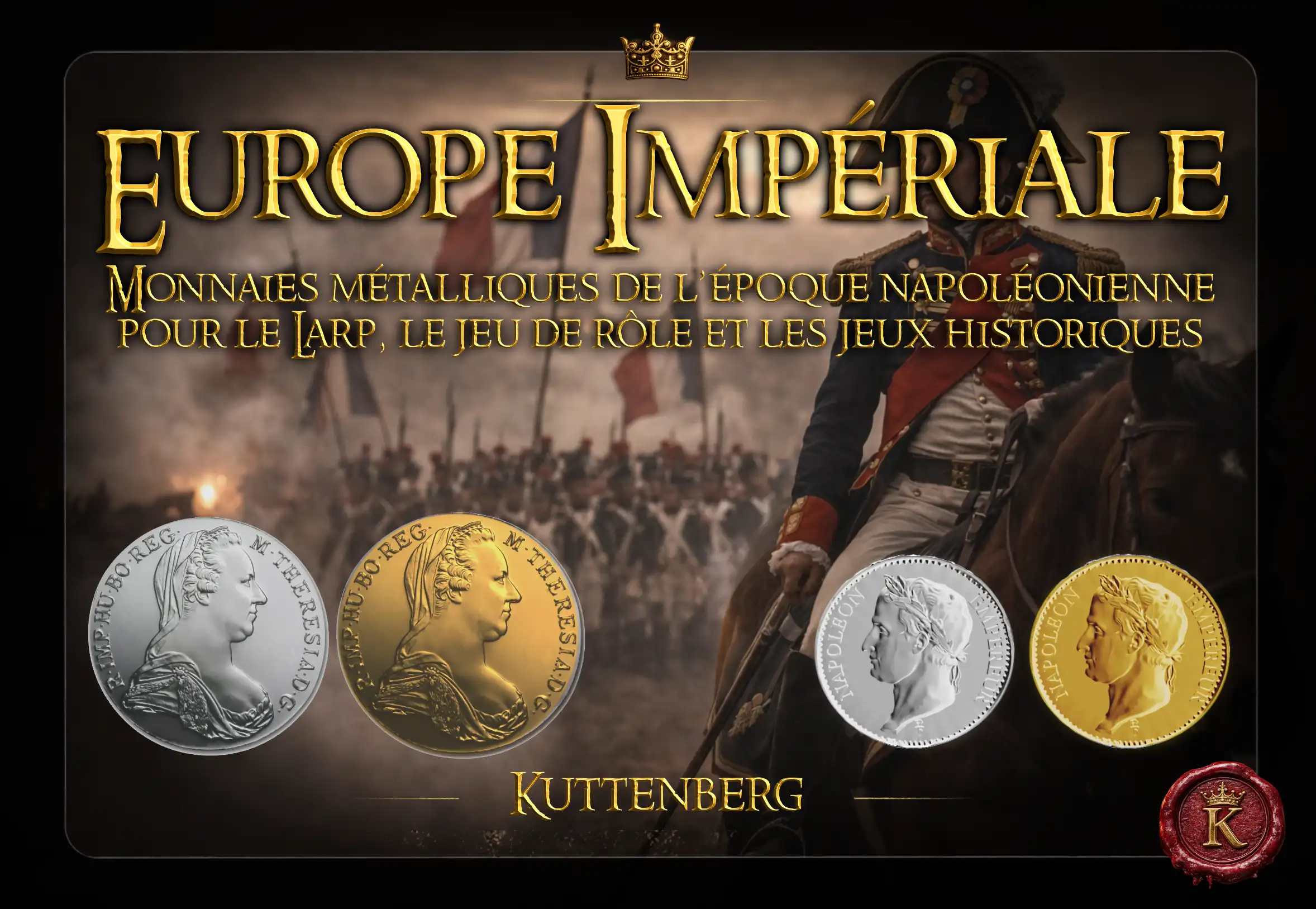
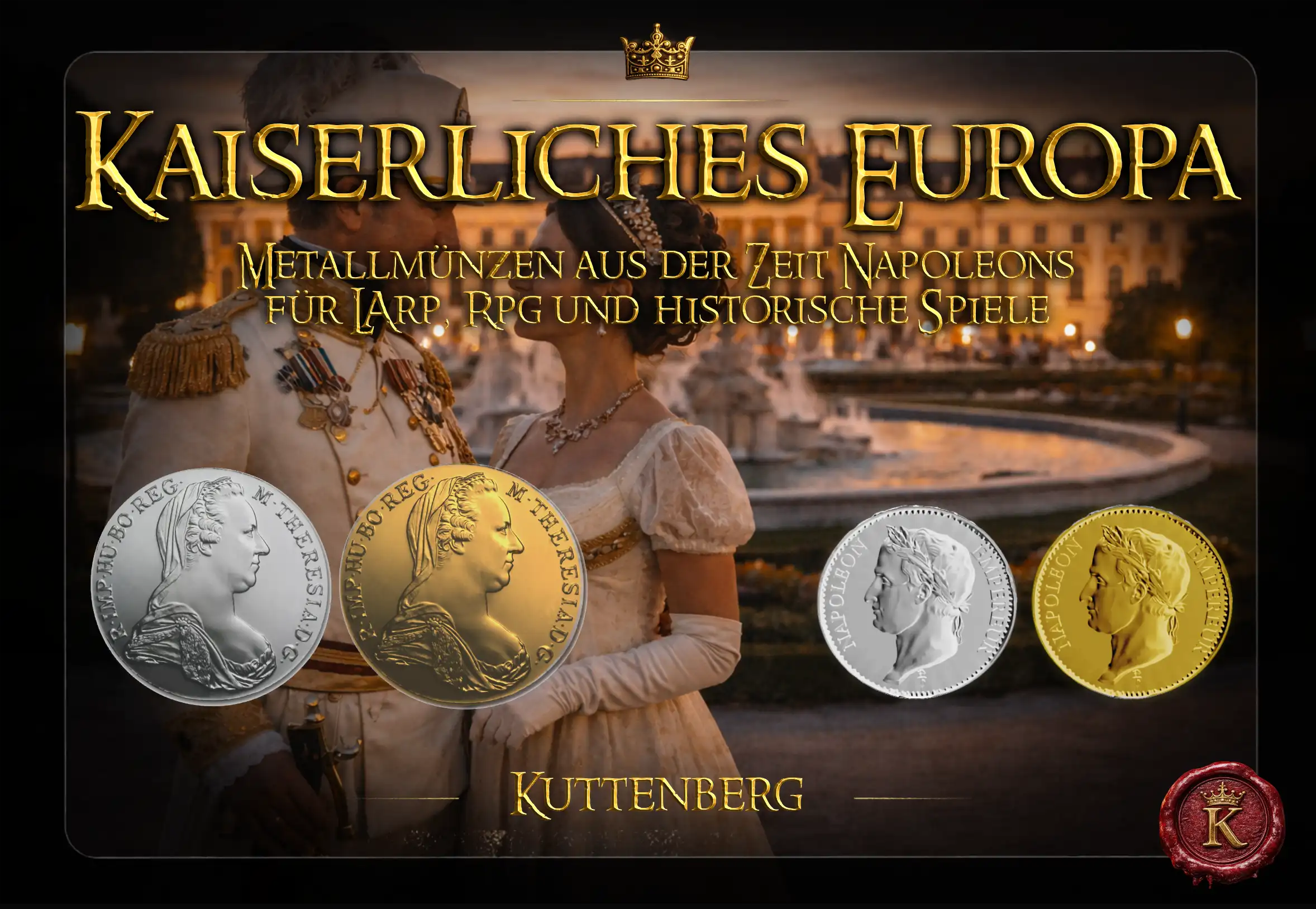
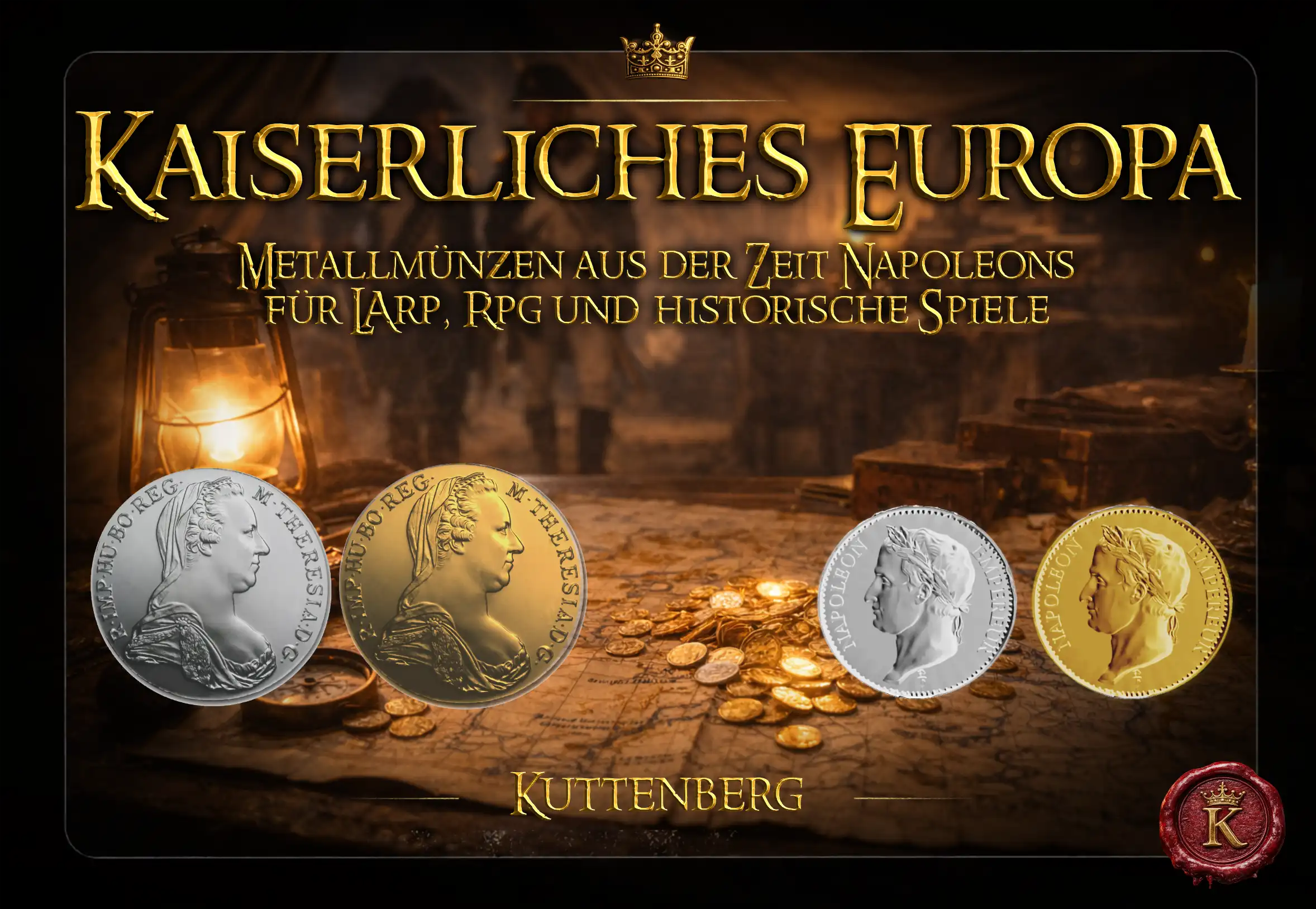
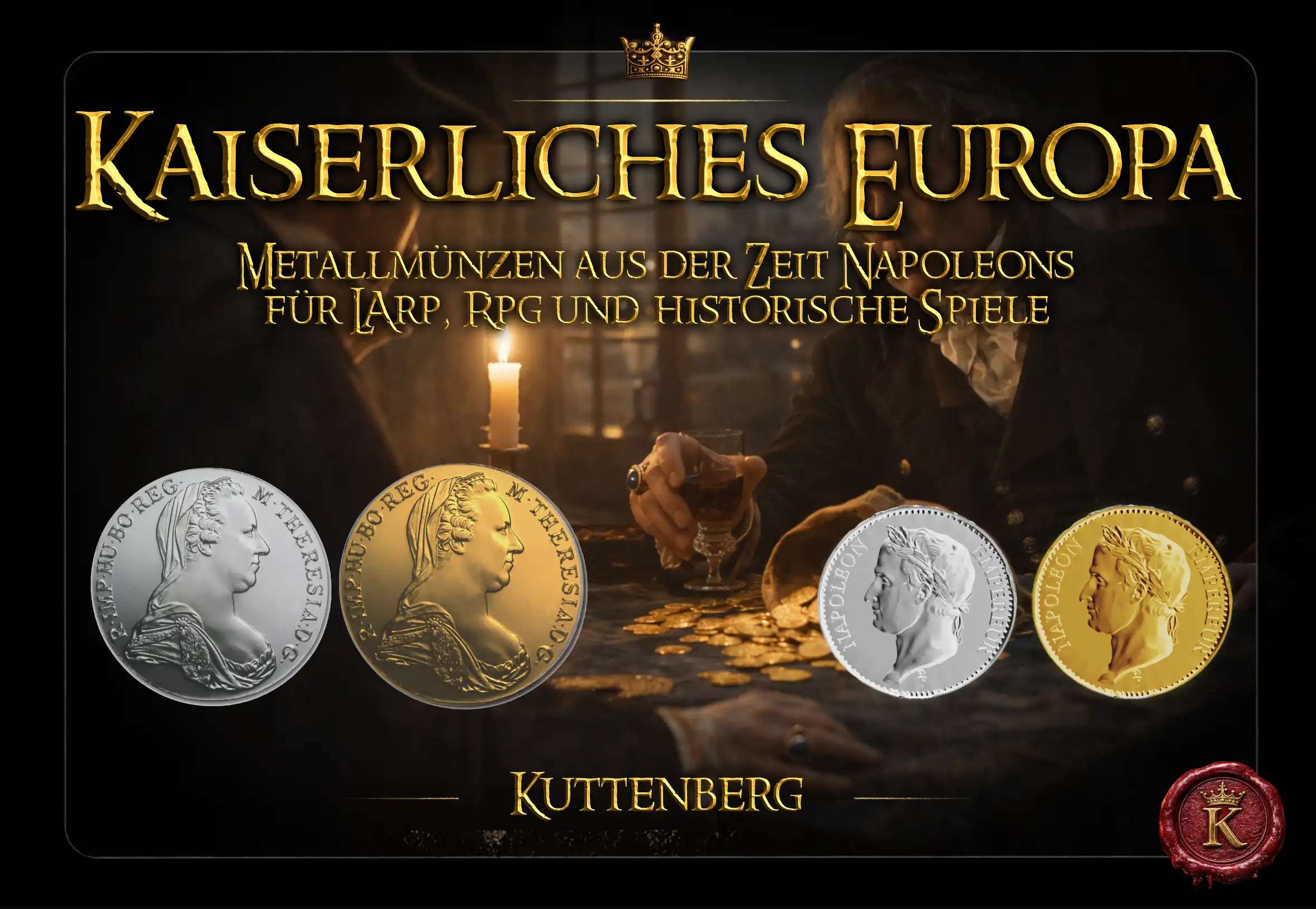
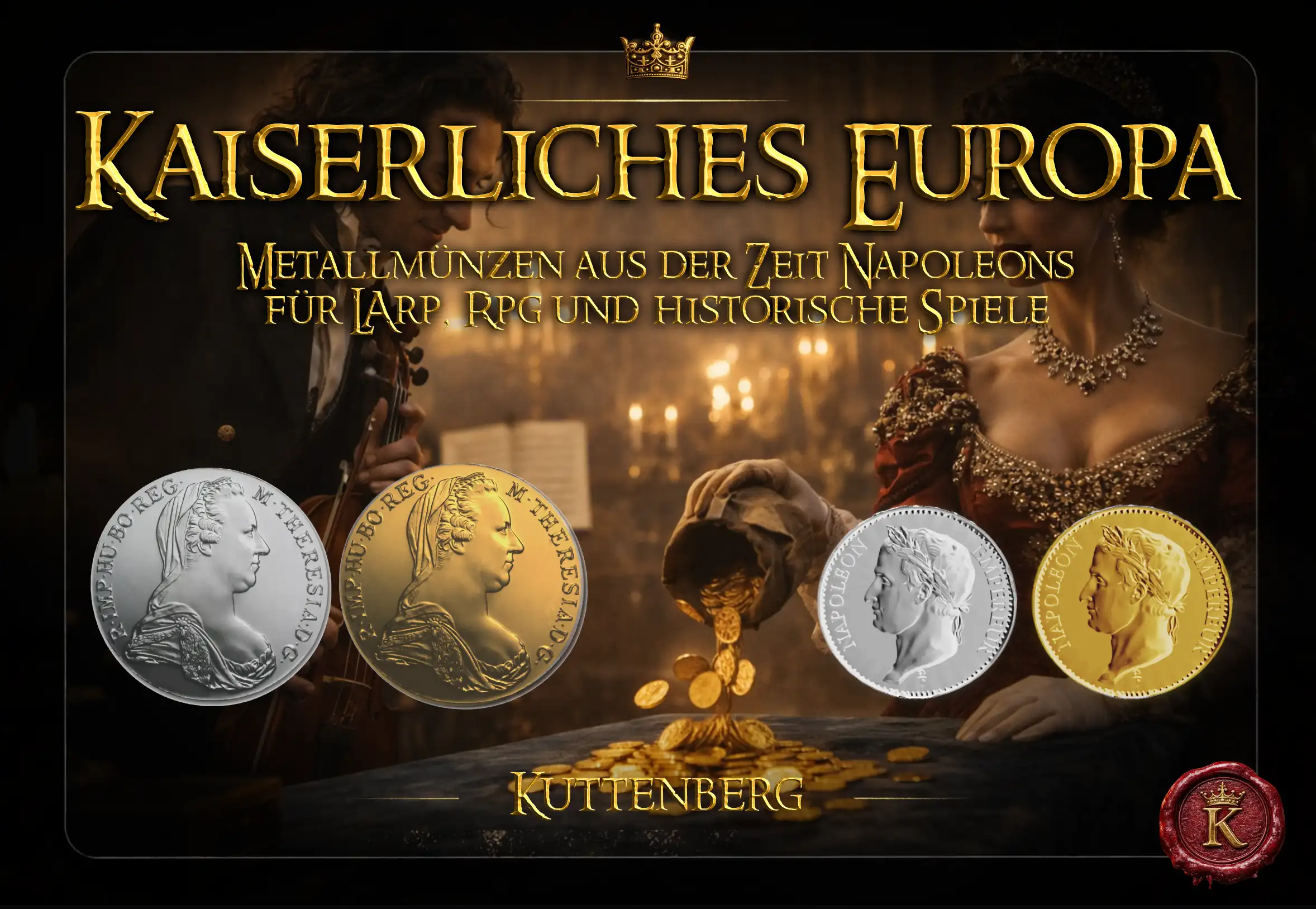
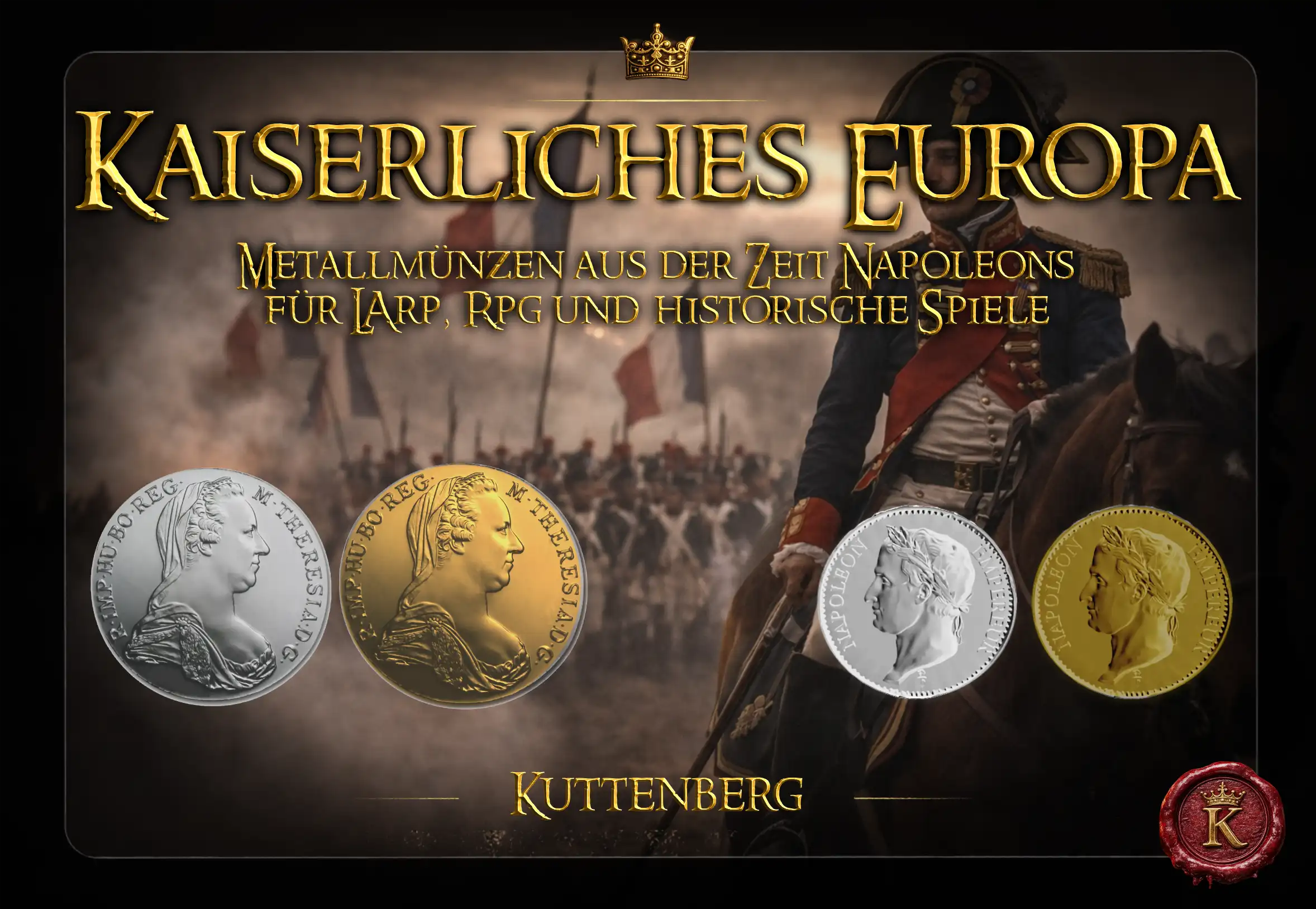
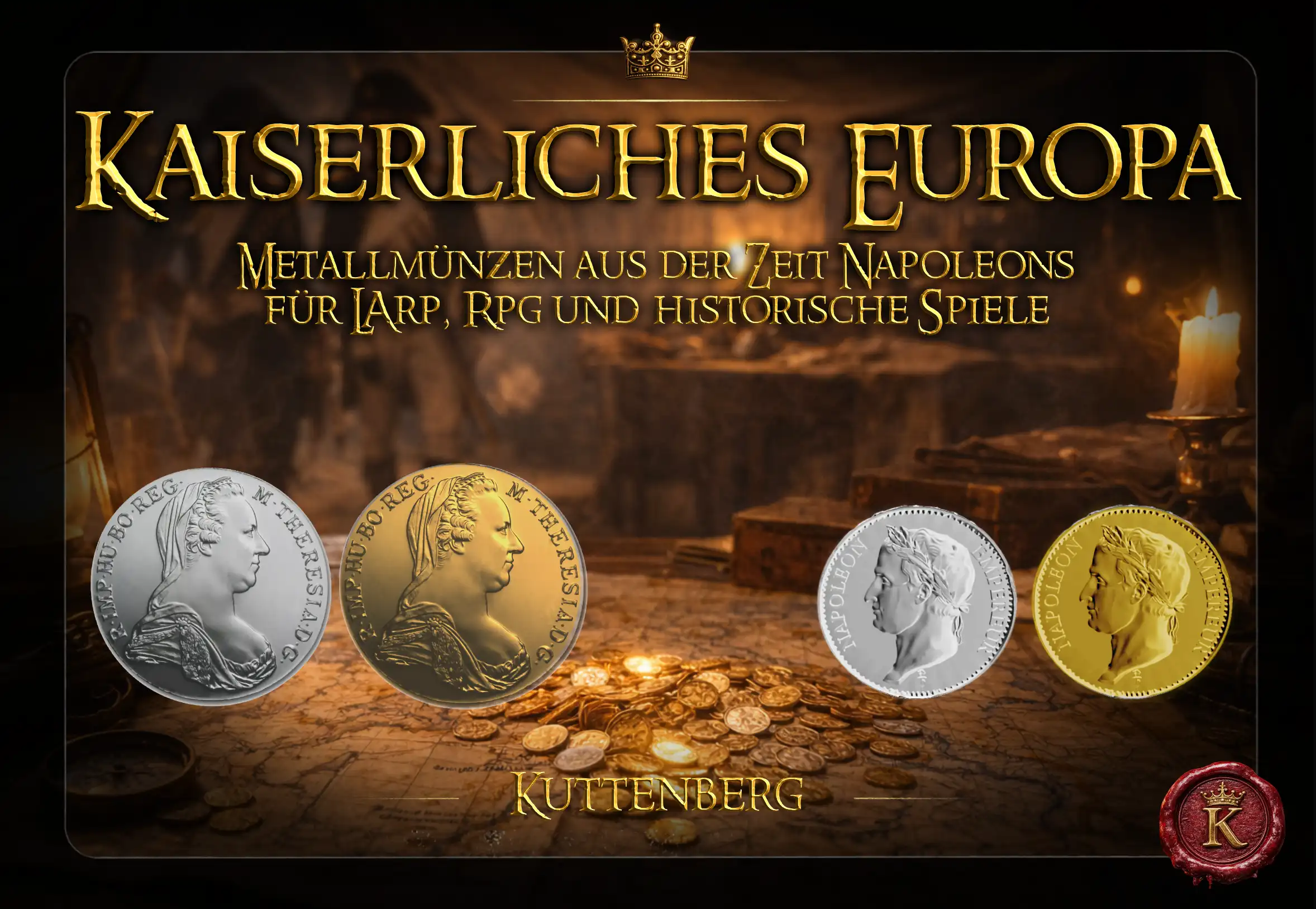
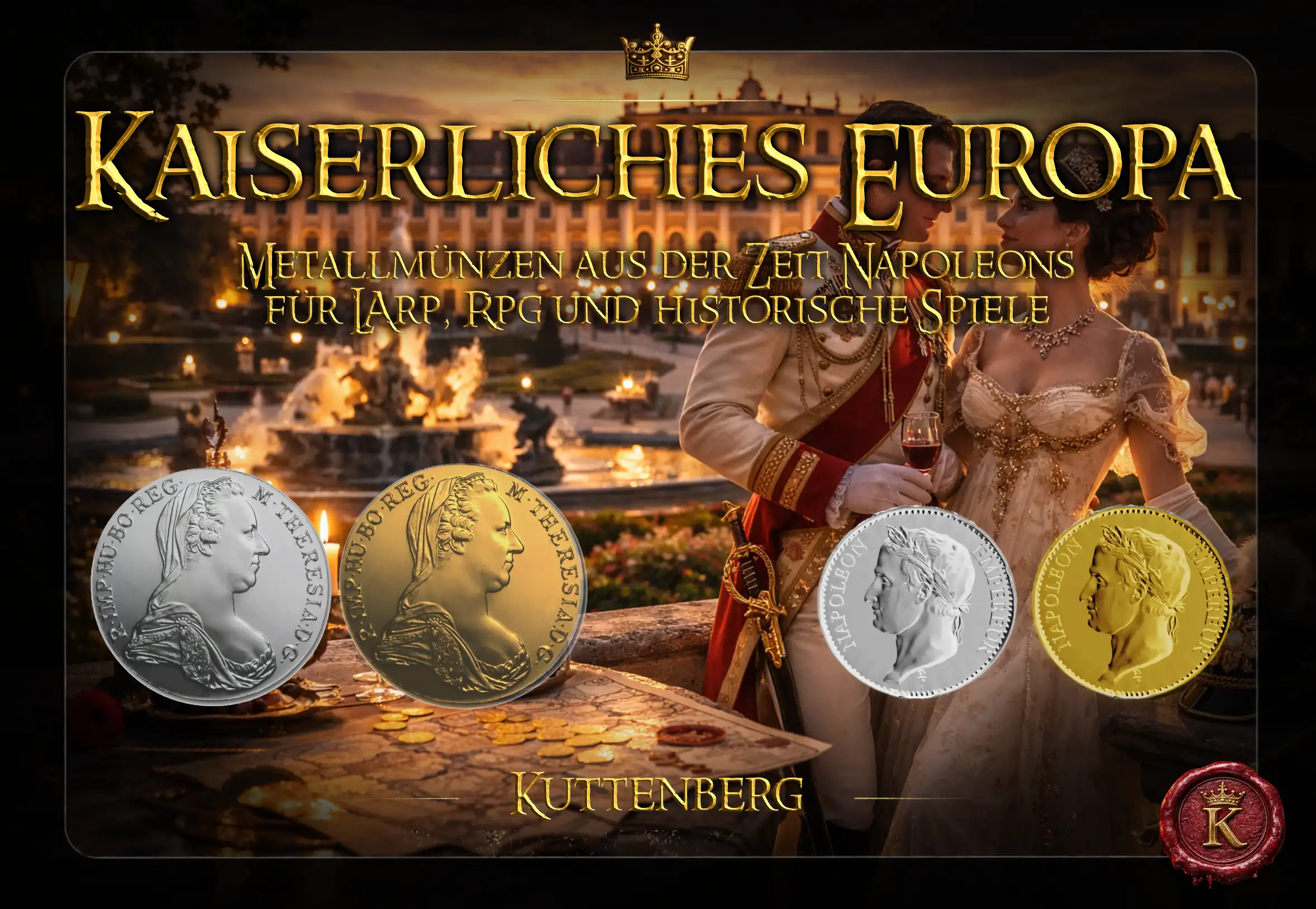
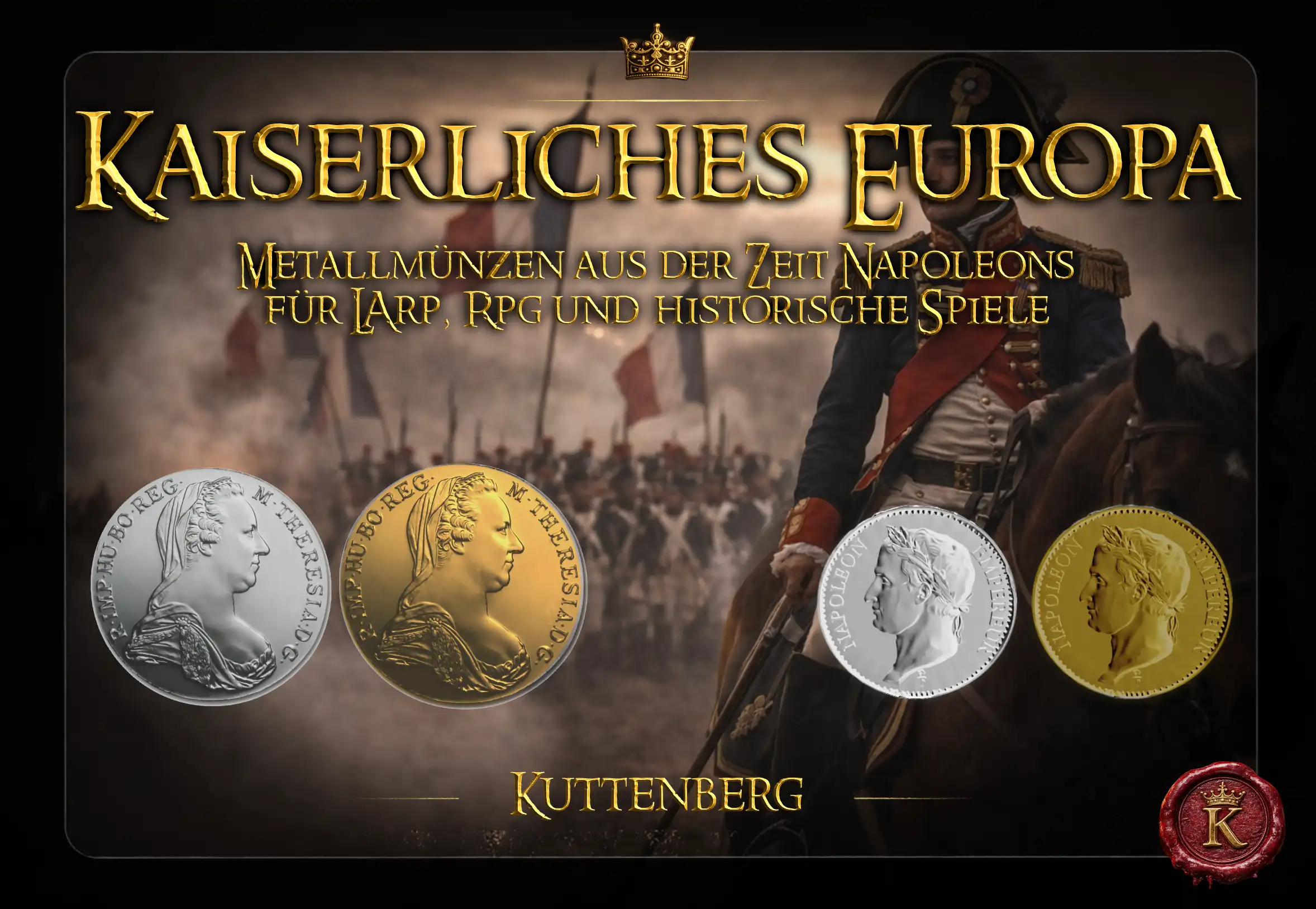
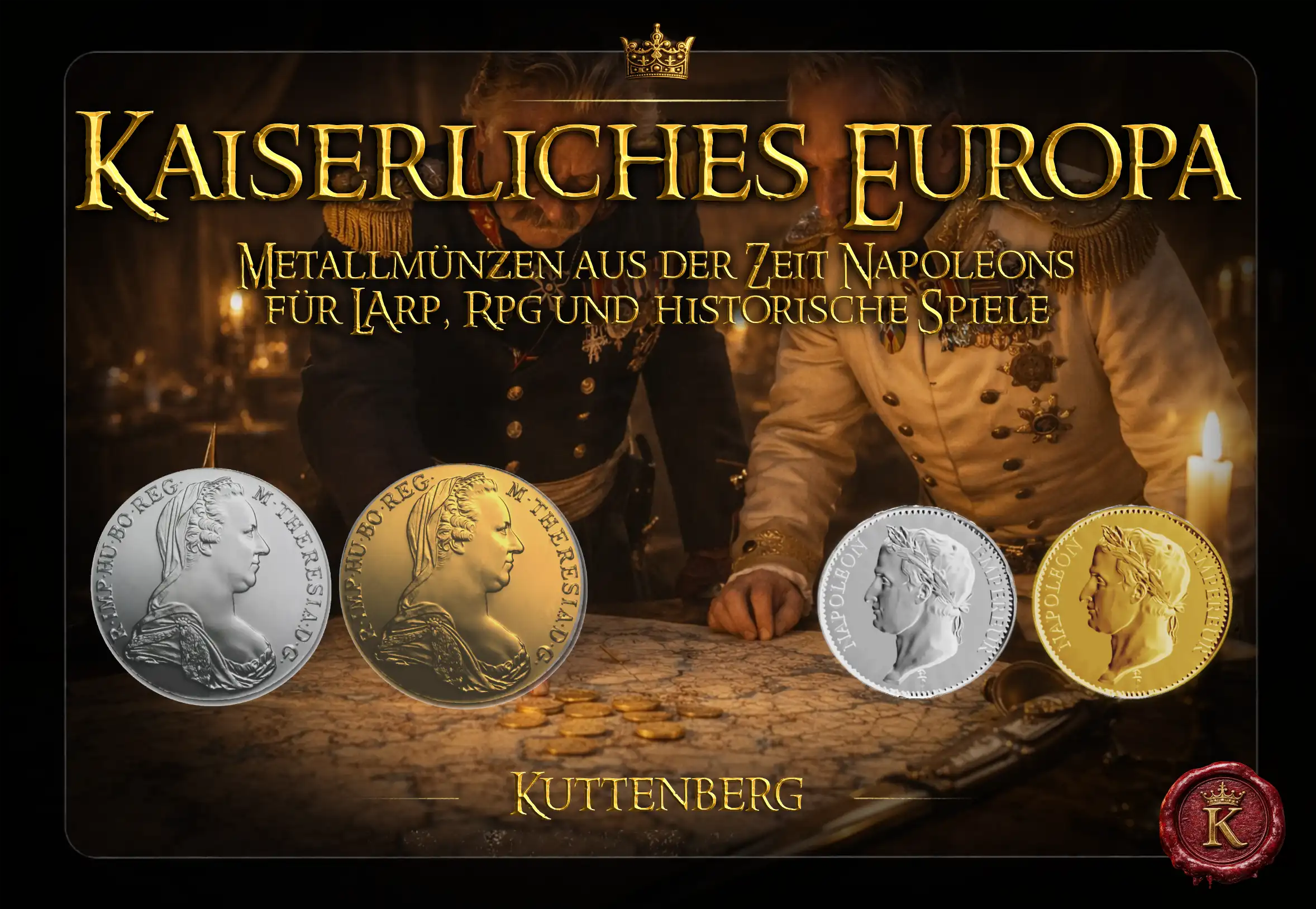
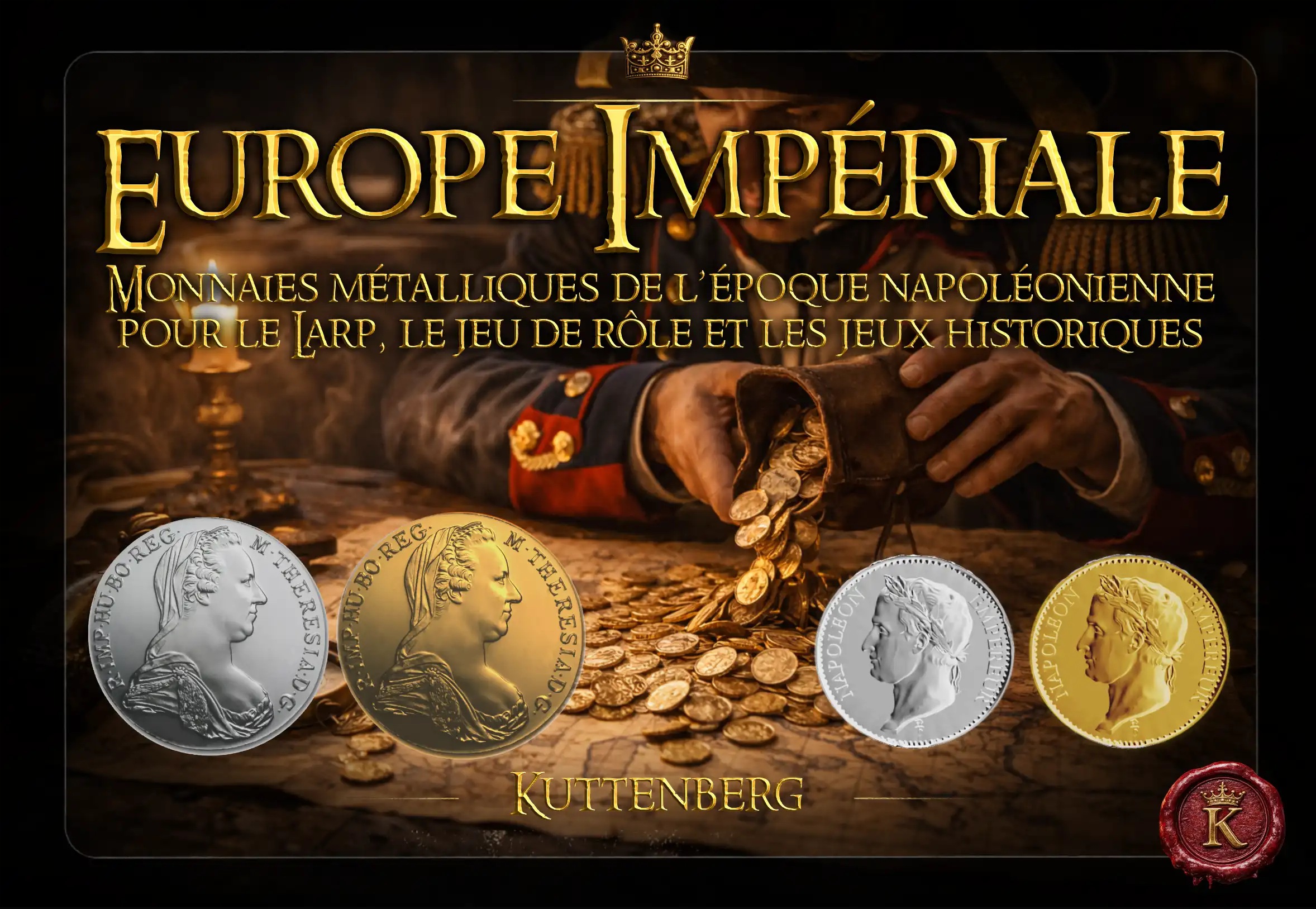
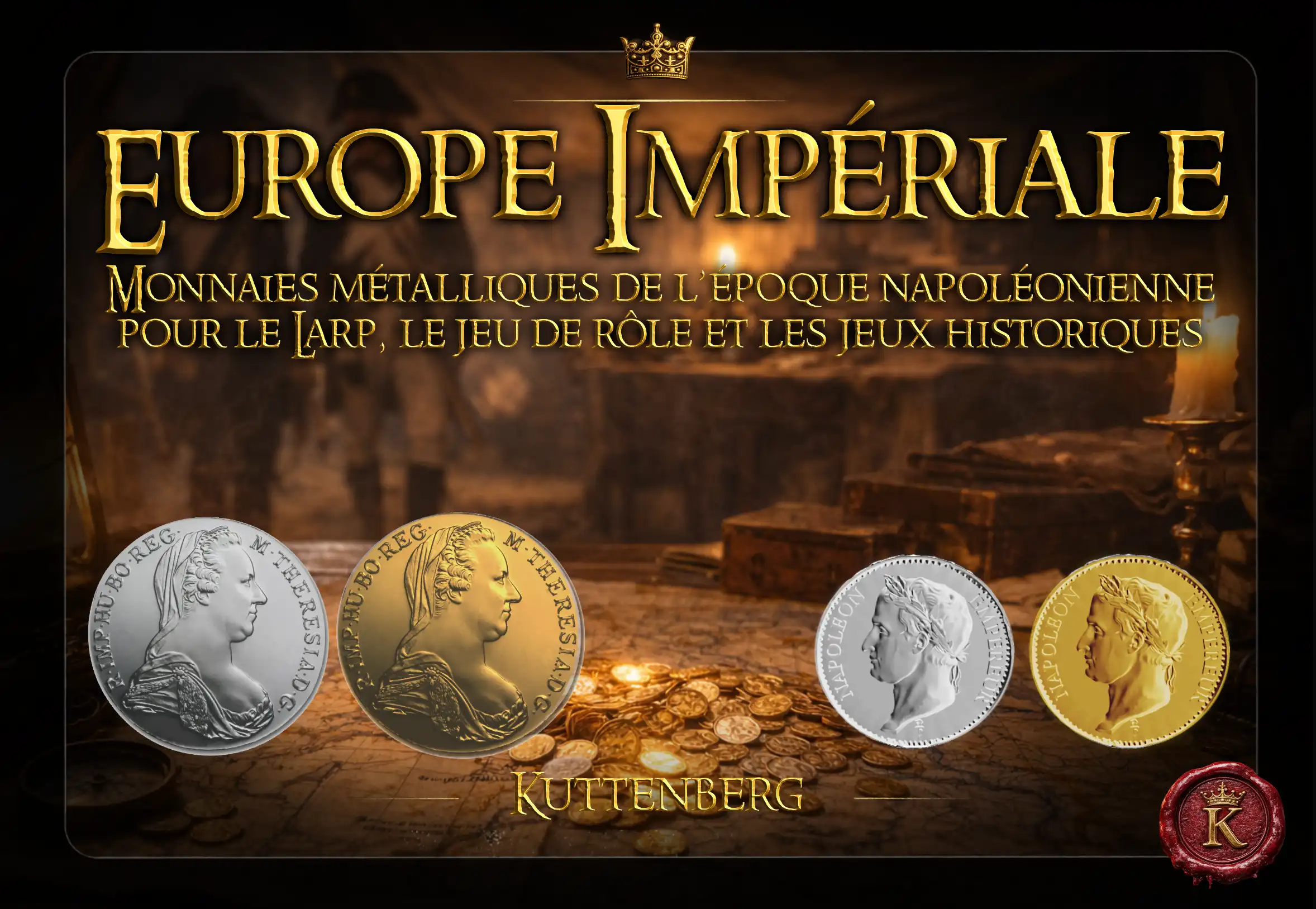
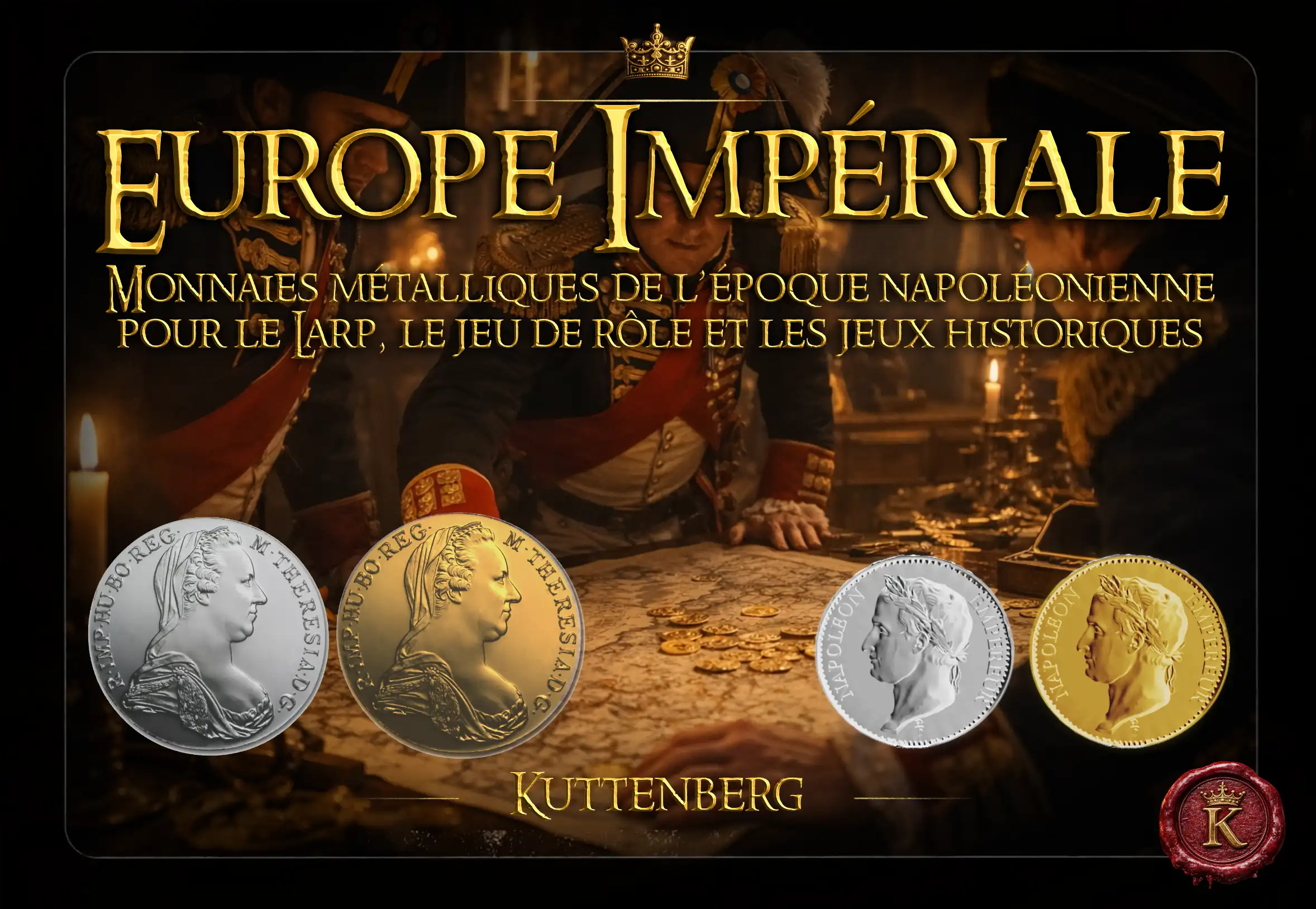
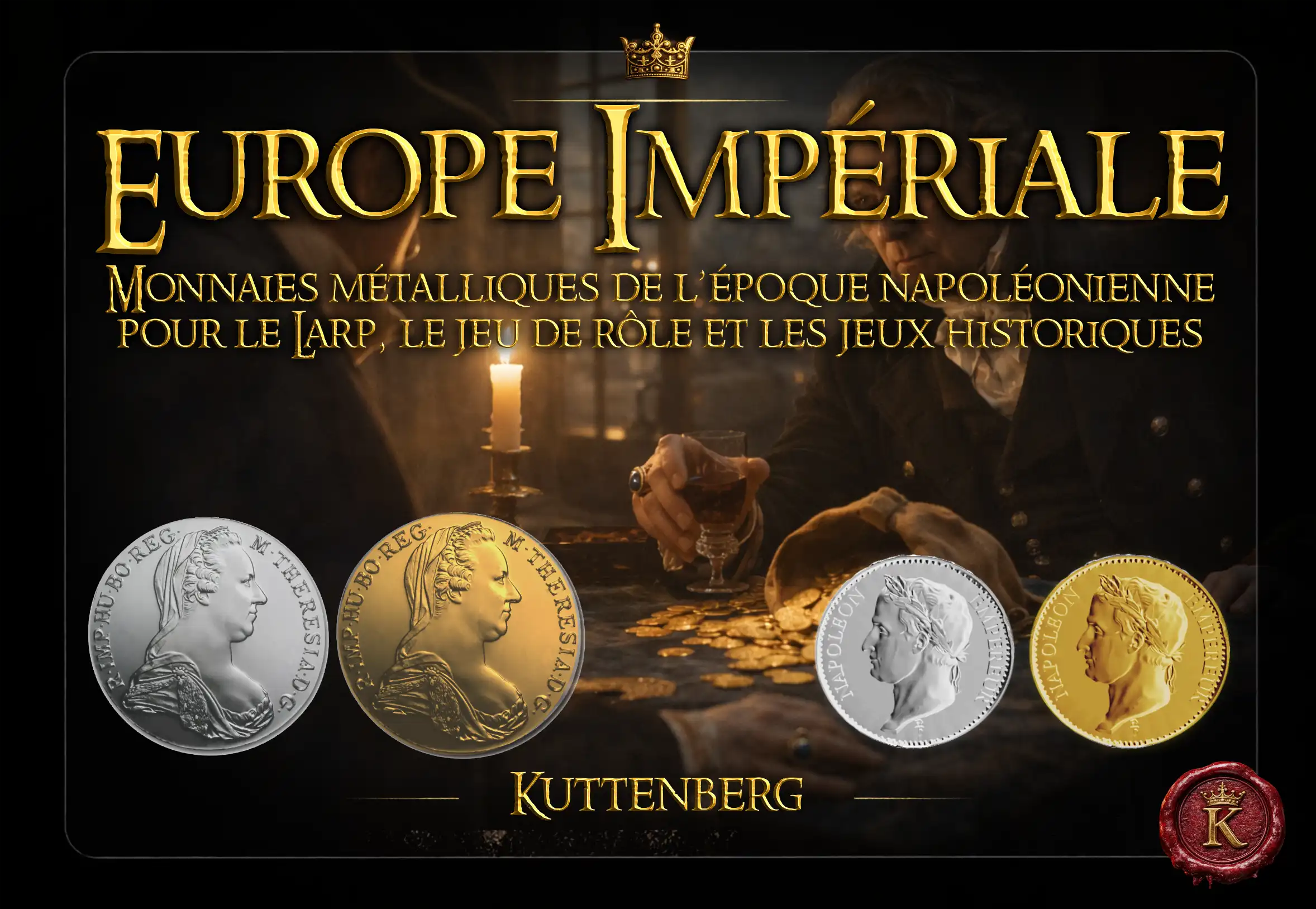
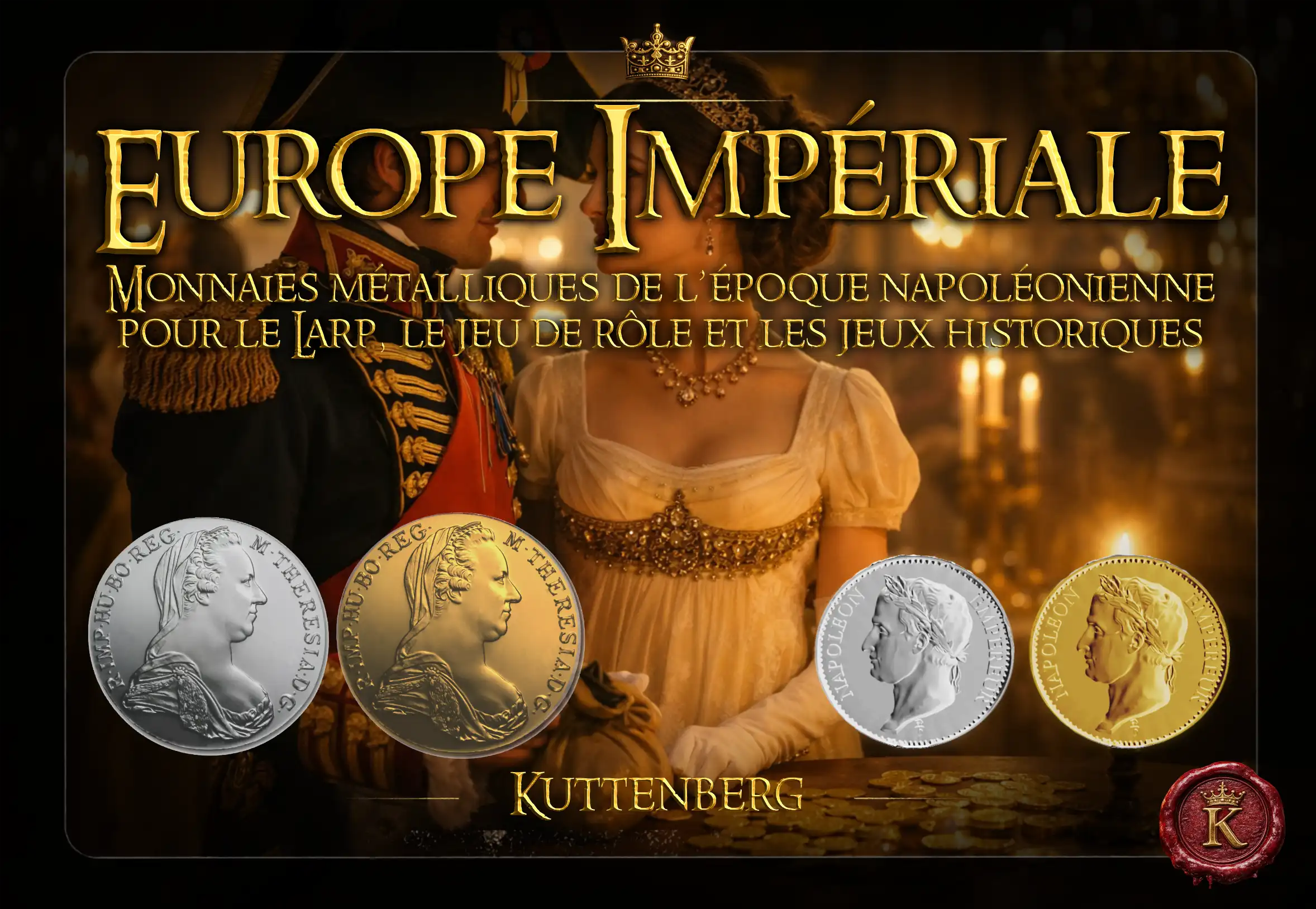
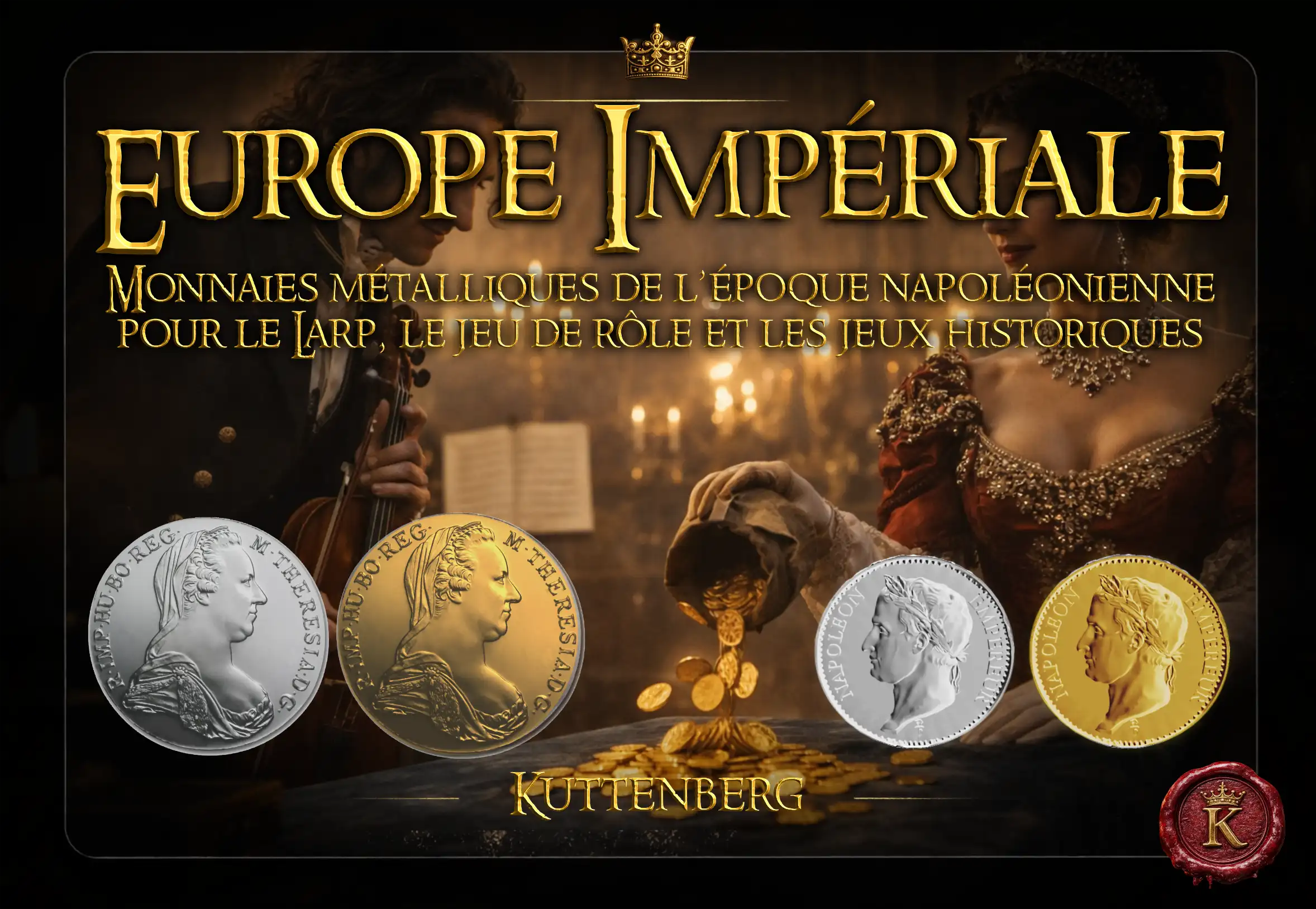
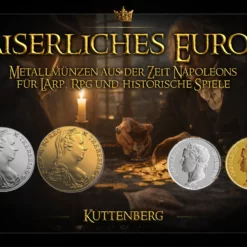
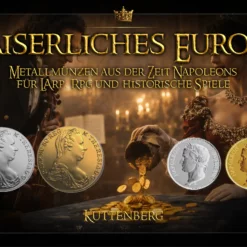
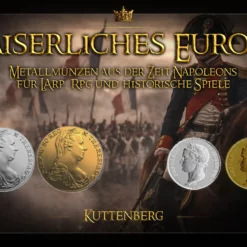
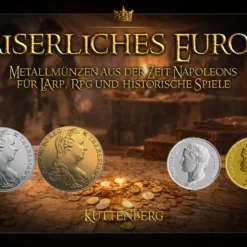
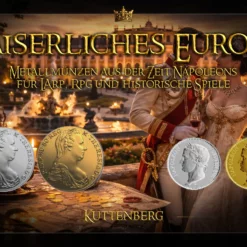
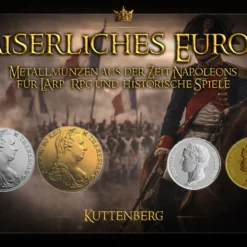
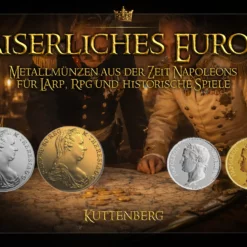
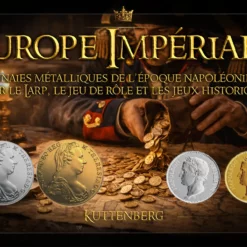
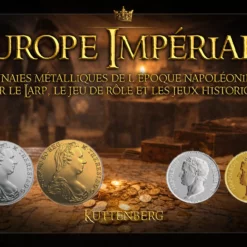
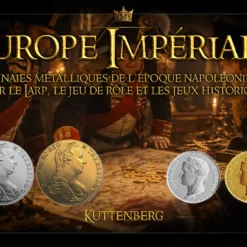
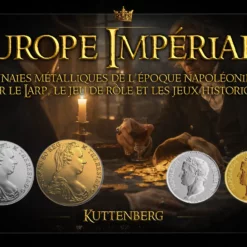
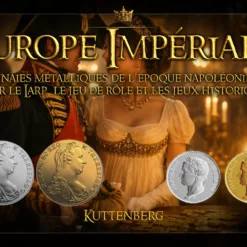
Coins of the Napoleonic Era
Price range: 600 Kč through 9.600 Kč
Coins of the Napoleonic Era
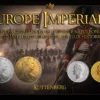
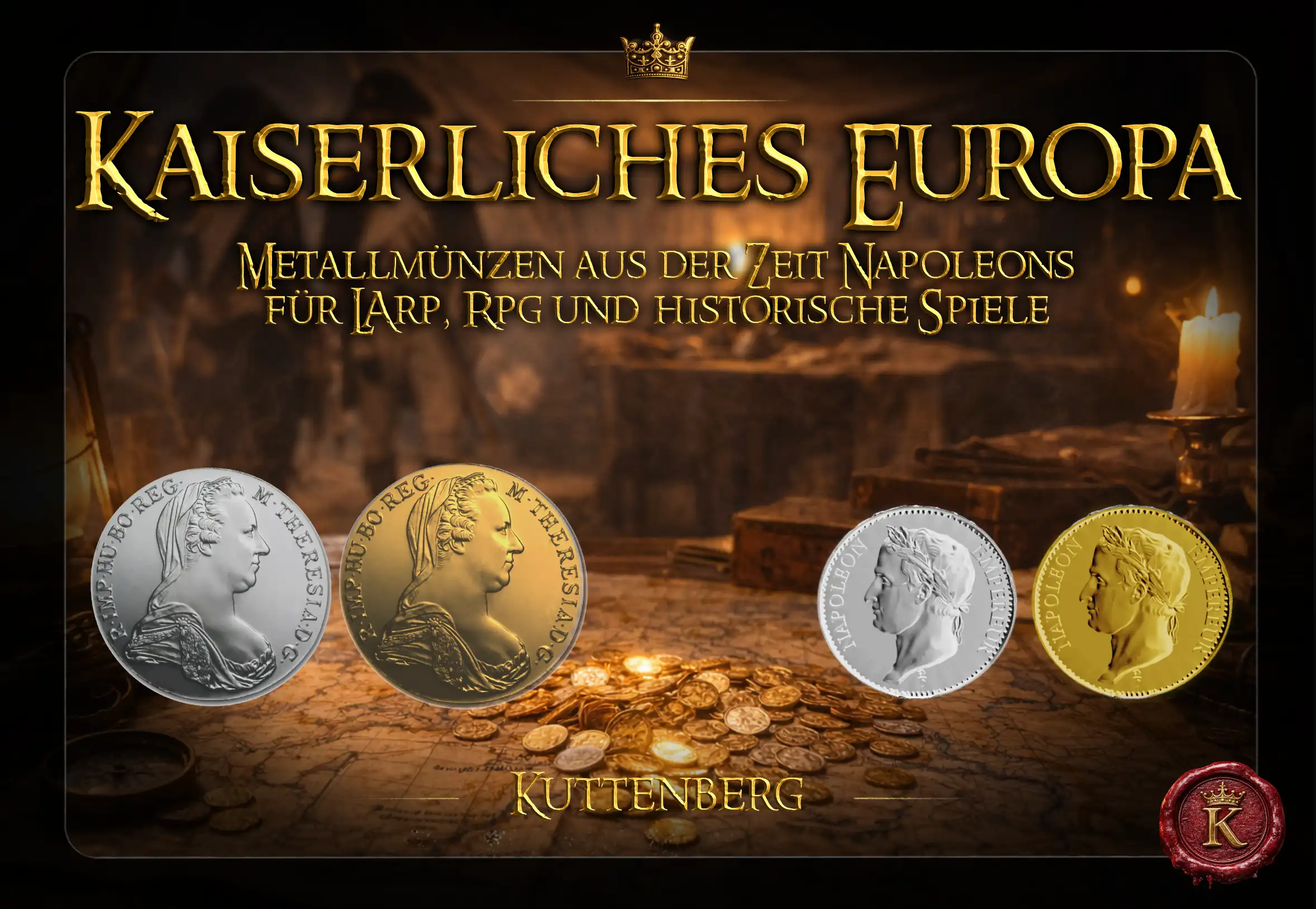
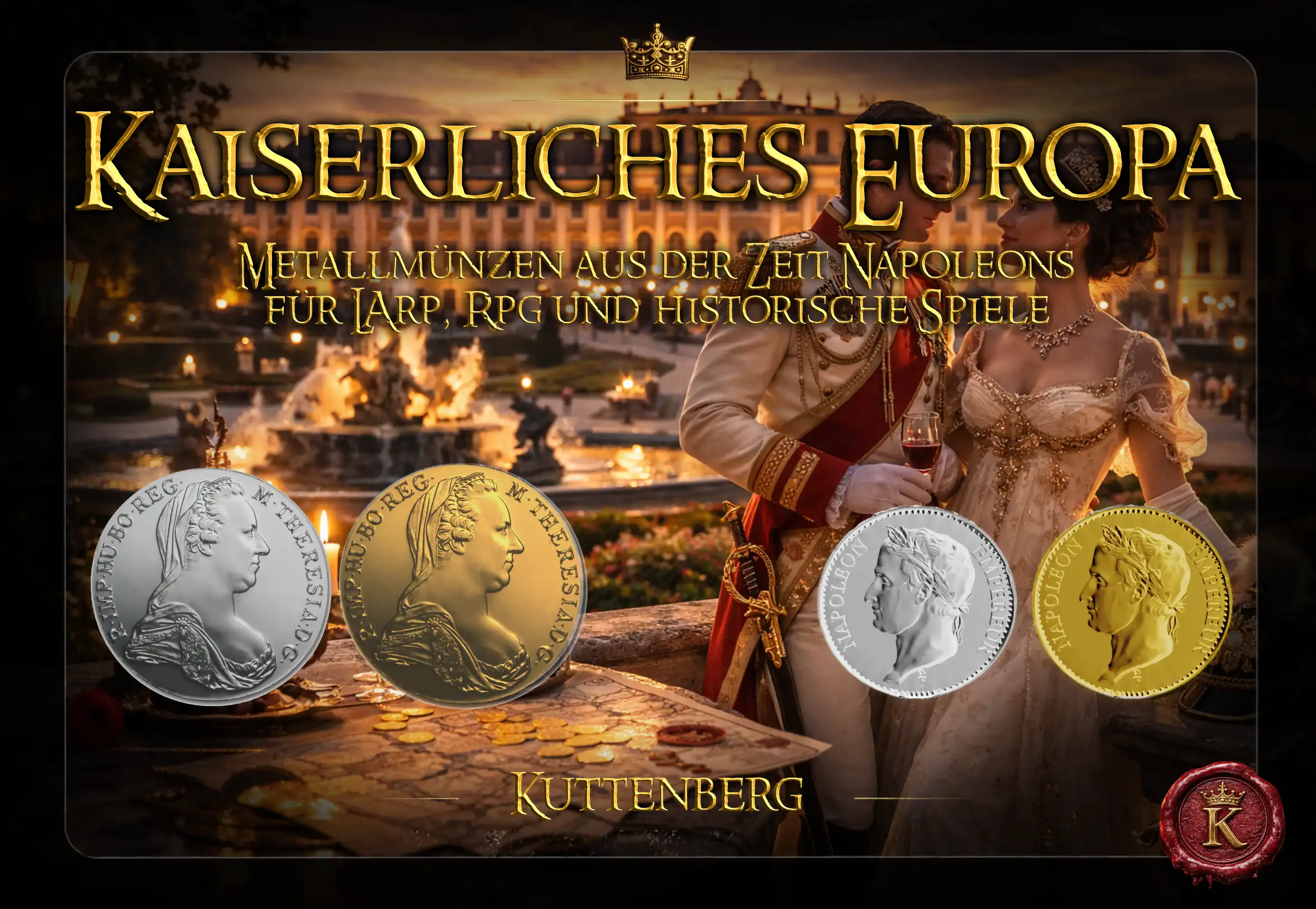
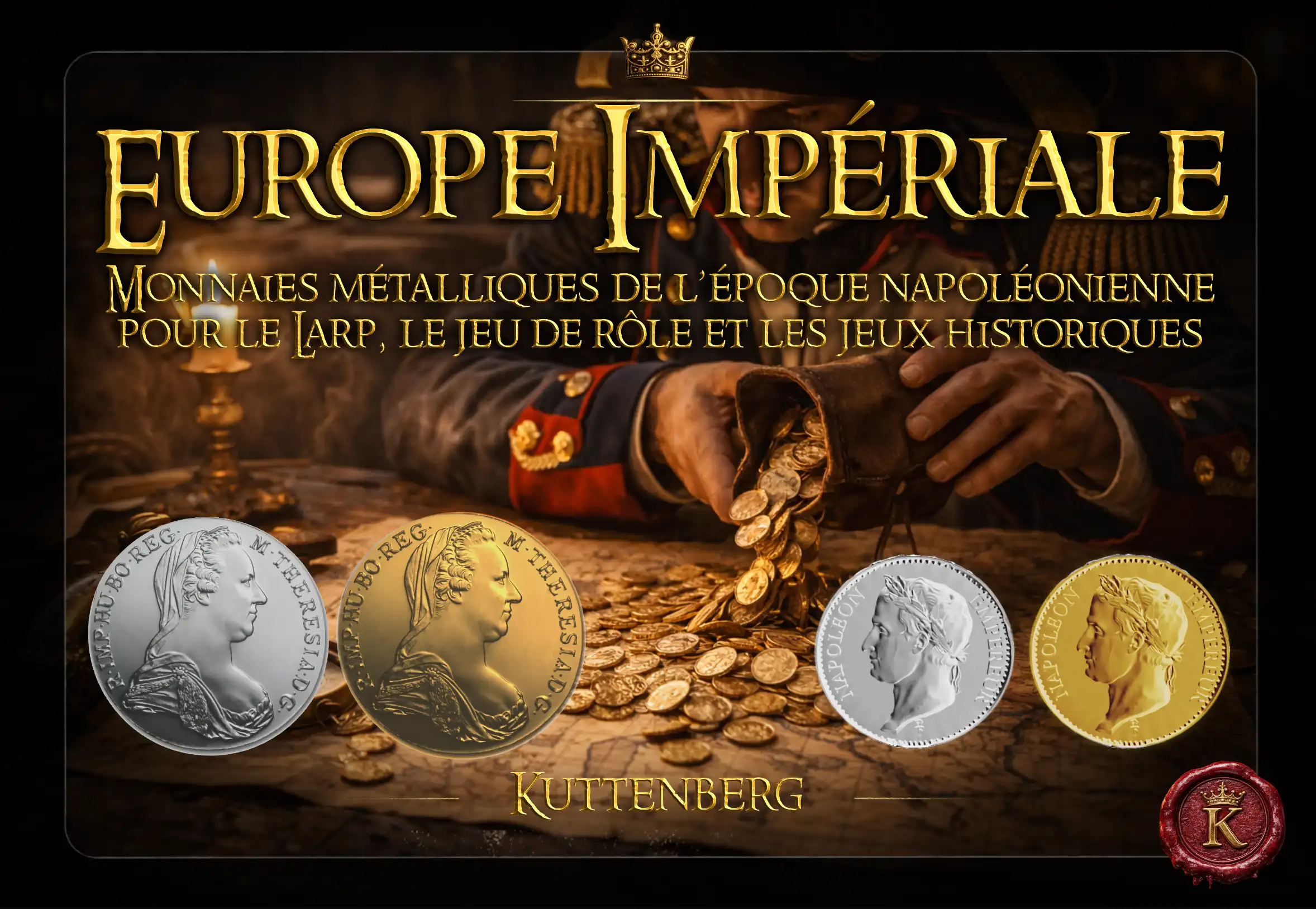
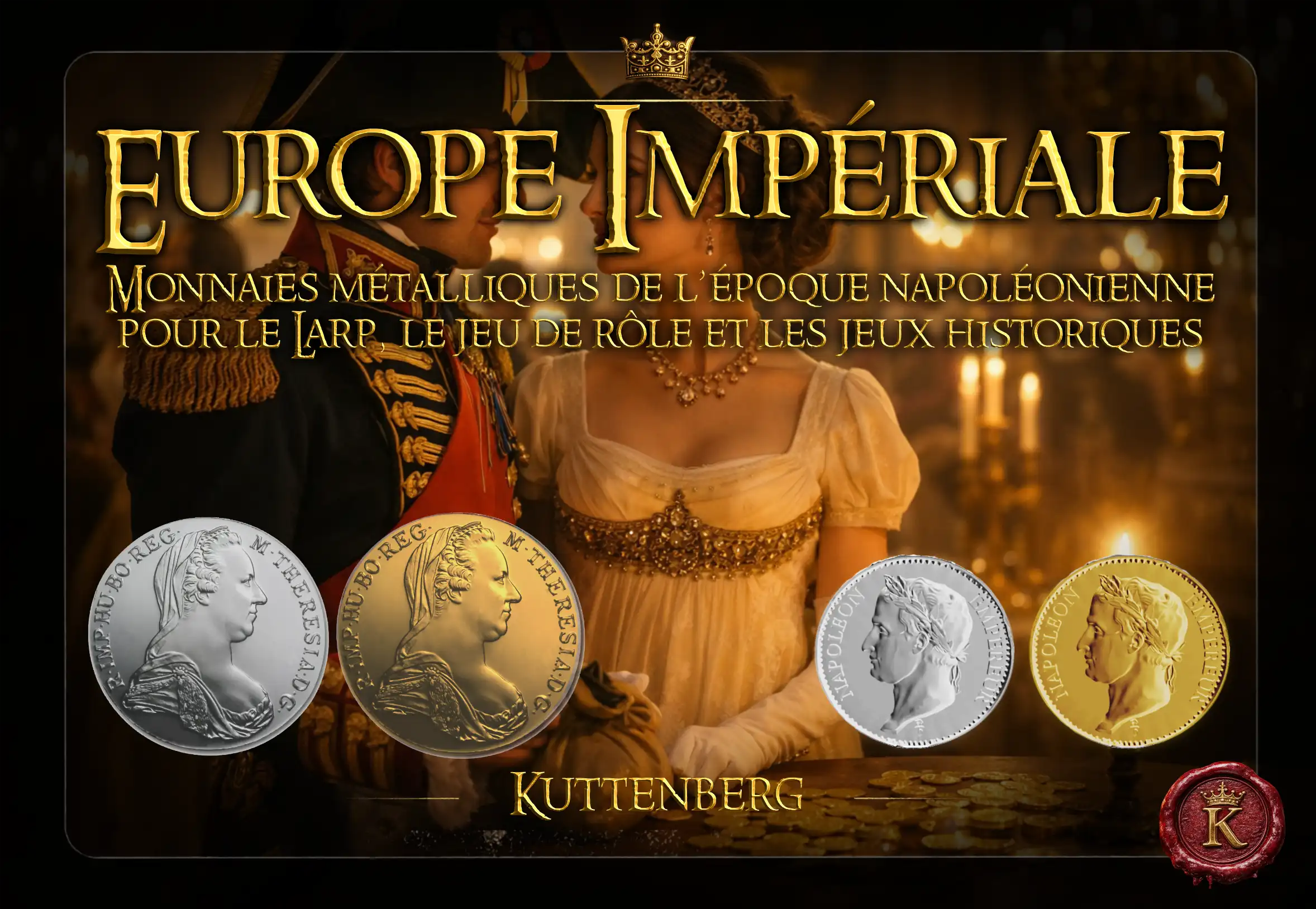
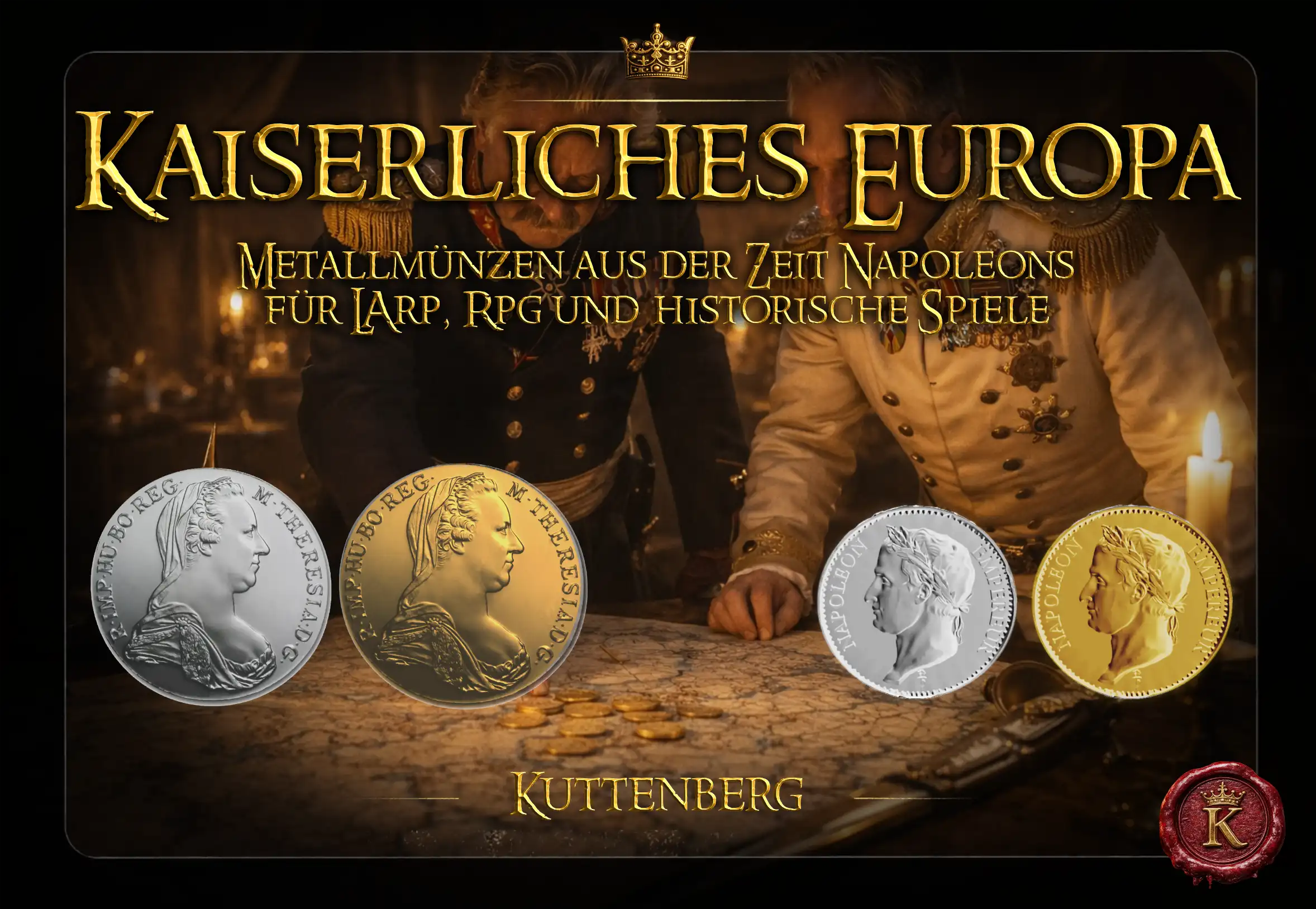
This set contains historical-style Napoleonic coins designed for reenactment, LARP and historical games.
To ensure a well-balanced game economy, the treasury includes a combination of silver and gold coins.
| Coin | Adventurer Set | Guild Treasury | King’s Treasury |
|---|---|---|---|
| Napoleon 20 Franc – silver | 40 | 120 | 400 |
| Napoleon 20 Franc – gold | 10 | 30 | 100 |
| Thaler 1780 – silver | 40 | 120 | 400 |
| Thaler 1780 – gold | 10 | 30 | 100 |
The Napoleonic Wars remain one of the most vivid periods of European history.
Armies marched across the continent and the world was changing.
Today, historical battle reenactments, military camps, Empire-style balls and civilian living-history events take place all across Europe.
When you stand in a camp among the tents, hear the drums and the officers’ commands, the world around you suddenly feels two centuries closer.
And in moments like these, small details matter.
Metal coins in a purse.
A soldier’s pay after a long campaign.
Silver thalers on the table of a crowded inn.
A gold Napoleon changing hands during an important deal.
Authentic coins can transform a scene more than almost any other prop.
When they ring against a wooden table, the sound instantly reminds us that history was not only about uniforms and weapons — but also about trade, power, and everyday life.
“A treasure you can actually hear when it hits the table.”
“Real metal coins that bring history to life.”
Perfect for
-
Napoleonic reenactment
-
theatre and film productions
-
cosplay
-
historical camps and military events
-
LARP and tabletop RPG settings
-
educational projects and museum programs
And just like two hundred years ago, these coins can begin to circulate once again.
This time as part of the stories you create.
Description
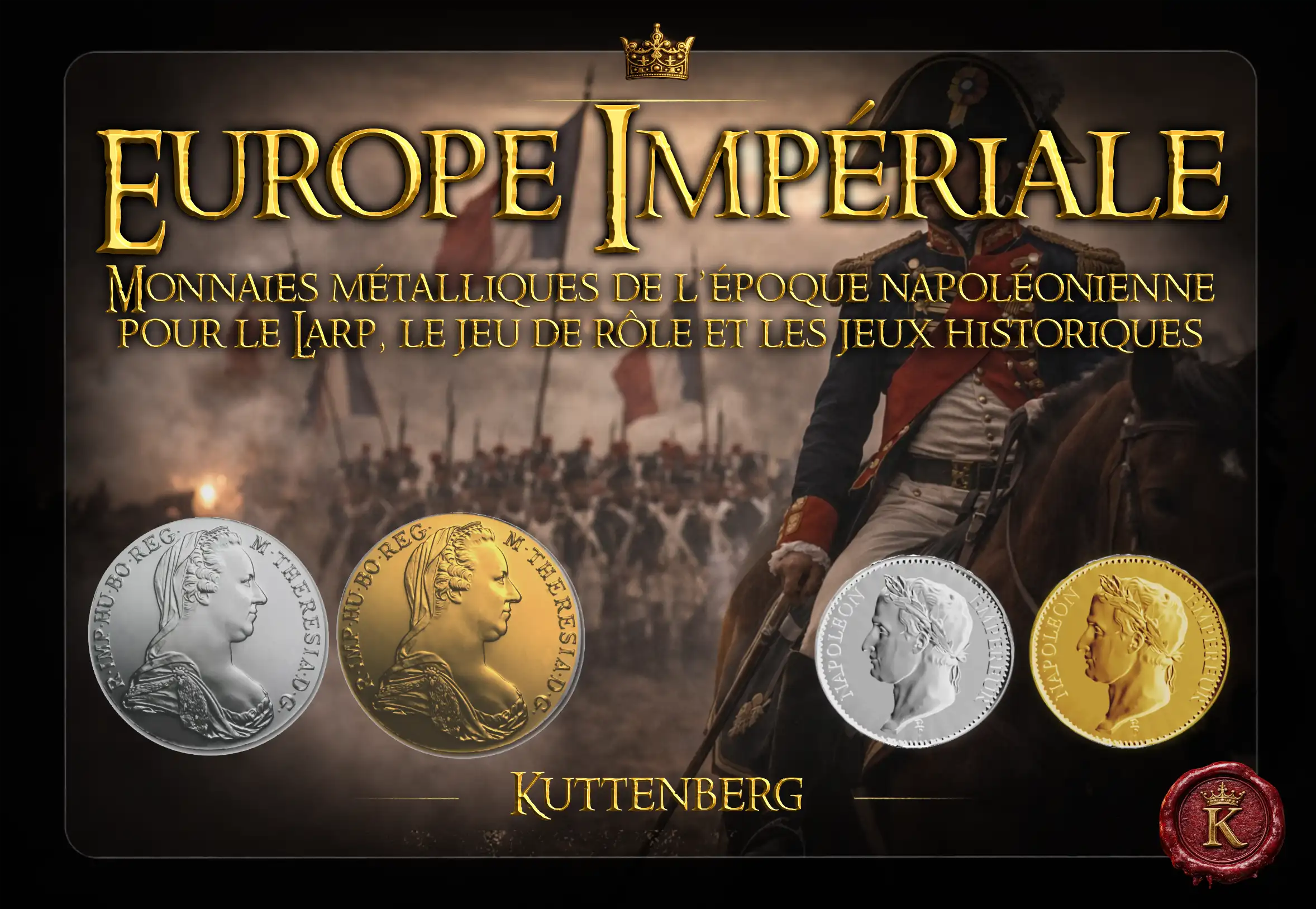
Coins of the Napoleonic Era
Ships sway gently in the harbor while the smell of the sea mixes with gunpowder and spices from the East. French soldiers march north, diplomats hurry to secret negotiations, and merchants count silver coins in their purses.
Europe is in motion.
Armies march from the Pyrenees to Moscow. Generals redraw borders on their maps, and every decision may change the fate of entire kingdoms.
In times like these, coins are more than just metal.
They are power.
They are opportunity.
They are the key to victory.
You open a heavy chest filled with metal and gold.
Now it is up to you what to do with the wealth inside.
Will you hire soldiers for the next campaign?
Bribe a diplomat to change the outcome of negotiations?
Or buy magnificent clothes and jewelry for the lady of your heart?
Coins Used During the Napoleonic Wars
During the Napoleonic Wars (1799–1815), Europe did not have a single unified currency.
Instead, many different coins circulated across the continent. Soldiers, merchants and diplomats often carried coins from several countries at the same time.
Among the most widely recognized were:
Maria Theresa Thaler (1780)
One of the most trusted silver trade coins in Europe and beyond. It circulated widely in international trade and was accepted from Central Europe to the Middle East.
Napoleon 20 Franc Gold Coin
Introduced during the rule of Napoleon Bonaparte, this coin became one of the foundations of modern European monetary systems.
Because armies moved constantly across borders, these coins often travelled thousands of kilometers — from military camps to markets, taverns and diplomatic negotiations.
Today they remain some of the most iconic coins of the Napoleonic era.
Treasure Set Options
Adventure Set
100 coins
Perfect for smaller games, home RPG campaigns, and intimate LARP sessions.
Guild Set
300 coins
Ideal for larger groups, game masters, and smaller historical events.
King’s Treasury
1000 coins
Designed for large LARP events, organizers, and truly impressive treasure chests.
Coin Composition
To ensure a well-balanced game economy, the treasury includes a combination of silver and gold coins.
| Coin | Adventurer Set | Guild Treasury | King’s Treasury |
|---|---|---|---|
| Napoleon 20 Franc – silver | 40 | 120 | 400 |
| Napoleon 20 Franc – gold | 10 | 30 | 100 |
| Thaler 1780 – silver | 40 | 120 | 400 |
| Thaler 1780 – gold | 10 | 30 | 100 |
Each set contains both historical coin types.
This distribution creates a simple and intuitive value system for gameplay.
Weight of the Treasure
| Variant | Approximate Weight |
|---|---|
| Adventure Set | approx. 750 g |
| Guild Treasury | approx. 2.25 kg |
| King’s Treasury | approx. 7.5 kg |
Real metal gives the coins an authentic feel.
When you place the treasure on the table, you don’t just see it — you can hear it and feel it.
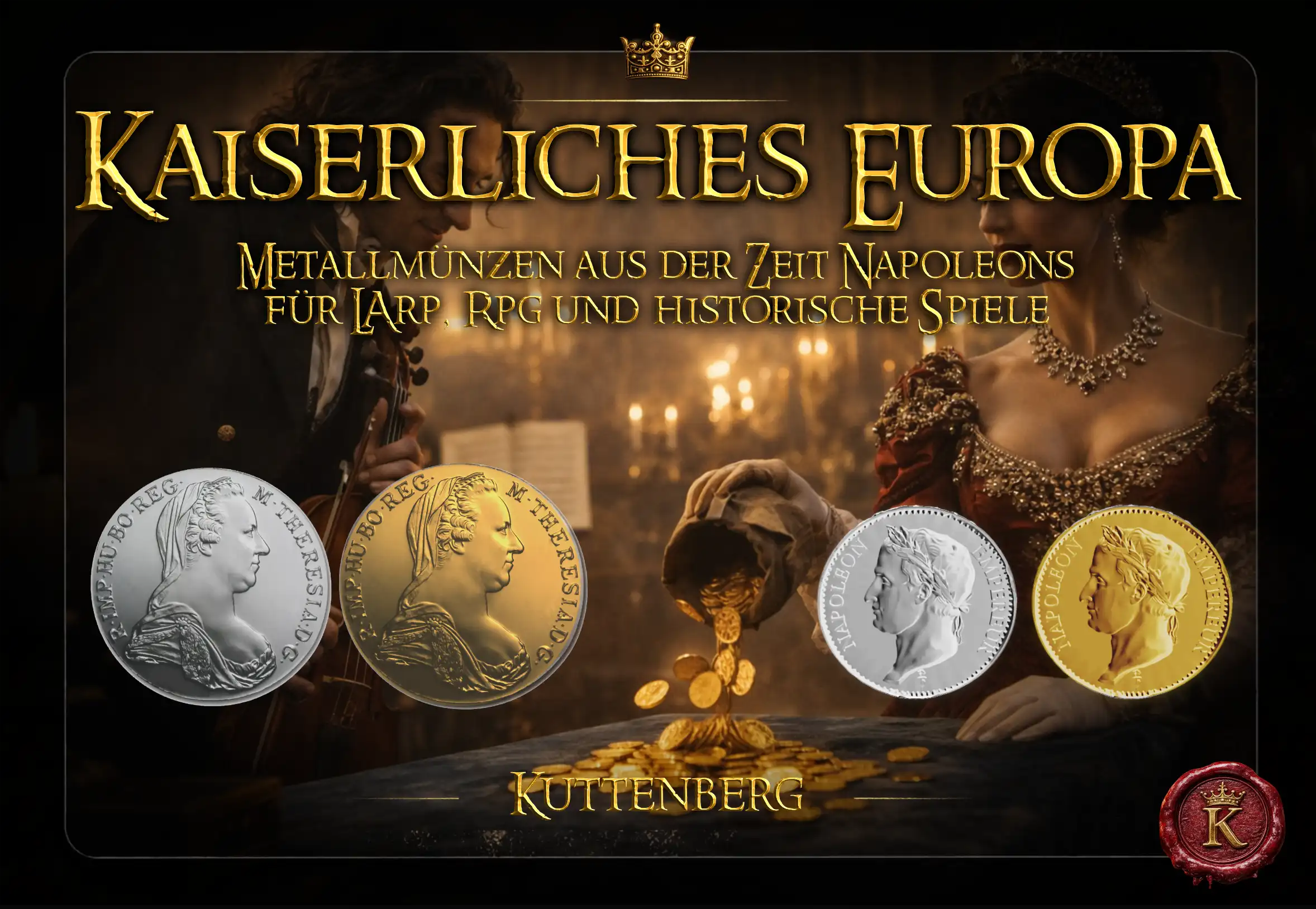
How Much Did a Soldier Earn in Napoleon’s Time?
Reenactors love concrete numbers.
Historical sources suggest roughly the following daily pay:
-
Infantry soldier: about 1 franc per day
-
Sergeant: about 2–3 francs
-
Captain: several dozen francs
-
War horse: around 300–500 francs
These numbers can help create a believable game economy during historical events or role-playing games.
Game Economy
These coins can be used in many types of games and historical events:
LARP
Coins can function as real currency for trade, soldiers’ pay, or hidden treasures.
RPG campaigns
A simple silver / gold system works perfectly for rewards and purchases.
Reenactment
Authentic props for historical camps and scenario-based events.
Historical festivals and events
Coins can be used for treasure hunts, trading scenes, ransom payments, or even as purchase tokens for food and goods.
Since their approximate value can be converted into euros, organizers can easily create a small historical economy during an event.
Historical Context
Soldier’s Pay in the Napoleonic Era
Pay in Napoleonic armies varied depending on rank, army and campaign conditions.
However, approximate values looked roughly like this:
| Rank | Typical Pay |
|---|---|
| Infantry soldier | about 1 franc per day |
| Sergeant | about 2–3 francs per day |
| Captain | 20–40 francs per day |
In reality, soldiers were often paid irregularly. Campaigns could last months before pay was distributed.
That is why coins were such an important part of military life — they represented both reward and survival.
The Price of a War Horse
Cavalry horses were among the most valuable military assets.
Typical cost during the Napoleonic period:
| Item | Typical Price |
|---|---|
| Cavalry horse | 300–500 francs |
| Saddle and equipment | 40–80 francs |
| Cavalry sabre | 20–30 francs |
A well-equipped cavalryman could therefore represent a value of several hundred francs.
This is why captured horses were often considered one of the most valuable prizes after a battle.
What Could One Franc Buy?
Prices varied across Europe, but roughly speaking:
| Item | Price |
|---|---|
| loaf of bread | 0.2–0.3 francs |
| simple meal | 0.5–1 franc |
| bottle of wine | 1–2 francs |
| night in an inn | 2–3 francs |
For a common soldier, even a few coins could therefore mean several days of comfort after weeks of marching.
💡 Malý trik pro reenactory, který můžeš klidně přidat na konec stránky:
Quick Rule for Events
A very simple rule used at many historical events:
1 silver coin = daily soldier’s pay
This makes it easy for participants to understand the value of money during the event.
Example of a Simple Game Economy
1 gold napoleon = 10 silver thalers
Possible prices:
| Item | Price |
|---|---|
| food for one day | 1 silver coin |
| night in an inn | 2 silver coins |
| soldier’s equipment | 5 silver coins |
| high-quality weapon | 1 gold coin |
| noblewoman’s dress | 2–3 gold coins |
Such a system allows players to create trade, rewards, intrigue and negotiations within the game.
How to Use Coins in Napoleonic Reenactment
Napoleonic camps and historical events usually recreate uniforms, equipment and battlefield maneuvers.
But everyday life of soldiers and civilians is often less visible.
That is exactly where coins can add a new dimension.
A small purse of silver thalers or a few gold napoleons can transform an ordinary scene into a living historical moment.
Below are several simple ways coins can be used during reenactment or historical events.
1. Paying the Soldiers
A unit commander may distribute soldiers’ pay during evening roll call.
For example:
-
infantry soldier: 1 silver thaler
-
non-commissioned officer: 2 thalers
-
officer: 1 gold napoleon
Such scenes look very authentic and also create coins that soldiers can later spend in the camp.
2. Field Tavern
A small stall or tent can function as a military tavern.
Soldiers may spend coins on:
-
beer or wine
-
bread and meat
-
tobacco
-
candles
The tavern quickly becomes a natural meeting place for conversation and storytelling.
3. Camp Merchant
Historical camps often include craftsmen or traders.
Coins may serve as payment for:
-
repairing equipment
-
sewing uniforms
-
buying buttons or accessories
-
horse care
This creates a small camp economy that is very attractive for visitors.
4. Gambling and Soldiers’ Games
Soldiers often passed the time with small gambling games.
Coins can be used for:
-
dice
-
card games
-
small wagers
These scenes often become some of the most lively moments in the camp.
5. Diplomatic or Spy Scenes
Larger events can also include small storylines:
-
bribing someone for information
-
paying a guide
-
delivering a secret message for a reward
A handful of coins and a short improvised scene can add a surprising amount of depth.
6. Ransom and War Booty
After a battle reenactment, the winners may symbolically confiscate the purses of the defeated.
Such small details make the scene feel authentic and also create new situations for further interaction.
7. Rewards for Visitors
Coins can also be used as part of the public program.
For example:
-
children receive a coin for completing a task
-
visitors can buy goods in the camp market using coins
-
organizers can create a small “historical treasure”
Why Coins Work
Coins have one advantage that many other props do not.
They naturally pass from hand to hand.
And that is how stories begin.
A soldier receives them as pay.
He spends them in a tavern.
The innkeeper pays a merchant.
And the coins continue their journey through the camp — just as they did two hundred years ago.
Coin Specifications
| Parameter | 20 Frank | Thaler |
|---|---|---|
| Diameter | 26 mm | 40 mm |
| Thickness | approx. 2 mm | approx. 2 mm |
| Weight | approx. 5 g | approx. 10 g |
| Material | zinc alloy | zinc alloy |
| Color | silver / gold | silver / gold |
A Journey Across Europe
In 1805, a gold coin leaves the Paris mint.
It is freshly minted. Its edges are sharp and it shines so brightly that the coin master can see his own reflection in it for a moment.
Shortly afterwards, it is given to a young officer of the Grande Armée as part of his pay. In his purse, it travels across half of Europe — through Germany, Austria, and further east.
After one of the battles, it changes hands.
This time, it is held by a Prussian cavalryman, who takes it as war booty. In a few days, it pays for a night’s lodging, hay for his horses, and a bottle of strong brandy in an inn on the outskirts of the city.
A few months later, the same coin appears on the table in the salon of a Viennese diplomat.
There, it is no longer just money.
It is an argument.
It is a conviction.
It is a small tool of great politics.
Years later, we find it in a completely different world.
It lies in the chest of a bourgeois family. Next to silver dollars, letters from the war and a few small pieces of jewelry.
And just like then, a new story can begin today.
Just open the treasure chest.
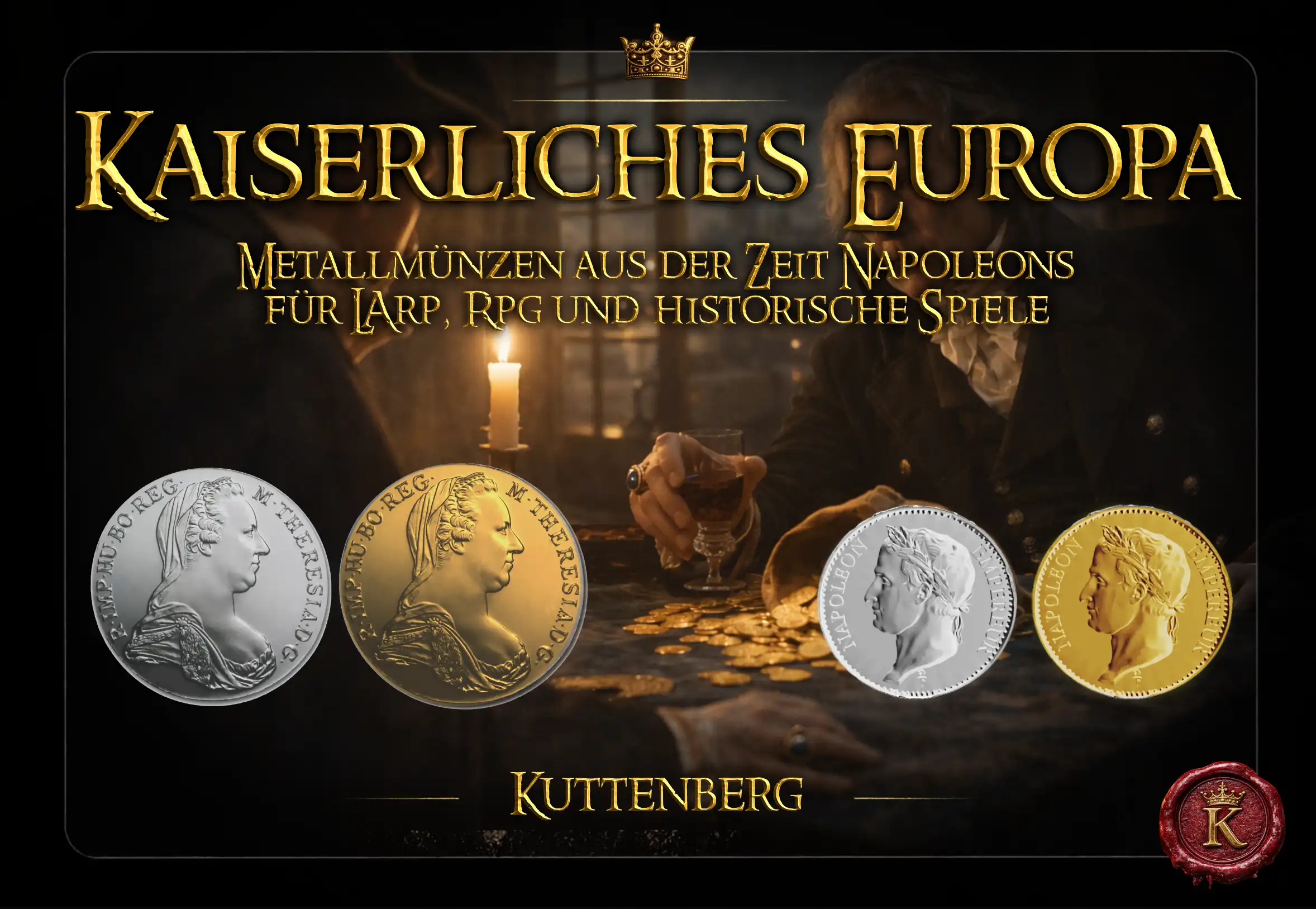
A Letter from the Peninsula
Spain, autumn 1811.
The camp lies quiet beneath a pale evening sky. Beyond the low hills the last light of the sun fades slowly, leaving the land in shades of grey and copper.
Fires burn along the line of tents. Around them, soldiers sit cleaning their muskets, drying their boots or sharing the last of the day’s bread.
Sergeant Thomas Carter sits on a wooden crate beside a small lantern.
On his knee lies a folded sheet of paper.
He has been writing for nearly an hour.
Letters are difficult things to write during a campaign. There is never enough light, never enough time, and one never quite knows what news should be sent home.
Beside the letter lies a small leather purse.
Inside are a few silver coins and one gold piece.
Thomas turns the coin slowly between his fingers.
It has travelled a long way — through merchants’ hands, across ports and battlefields, from one soldier to another.
Coins travel farther than men, he thinks.
He places the coin back in the purse and finishes the last line of his letter.
When this war is over, I shall come home.
He pauses for a moment, looking at the dark hills beyond the camp.
In the distance, somewhere beyond those ridges, the French army waits.
Tomorrow they may march again.
He folds the letter carefully.
If it reaches England, it will carry with it a small promise.
Not of victory.
But of returning home.
Waiting at Home
England, spring 1812.
The garden behind the house is quiet in the soft afternoon light. Apple trees are beginning to bloom, and the scent of the first flowers drifts slowly through the warm air.
Elizabeth and Anne sit at a small wooden table near the garden wall.
Between them stands a teapot and two delicate cups.
On the table lie several coins.
Elizabeth has just emptied them from a small purse so she can count them again.
Anne picks up one of the silver coins and turns it thoughtfully in the sunlight.
“You know,” she says after a moment, “I used to think coins were only important to merchants.”
Elizabeth smiles faintly.
“I suppose we all did.”
These coins arrived with the last letter.
A short one, written somewhere in Spain.
When the war is finished, the letter said, we shall have enough to begin a life together.
Anne gently places the coin back on the table.
“Do you think they will come home soon?”
Elizabeth looks out across the garden.
The war has already lasted longer than anyone expected.
Every week the newspapers bring new reports of battles in places most people had never heard of before.
Salamanca.
Talavera.
Badajoz.
She folds her hands quietly.
“They must,” she says at last.
Anne reaches across the table and squeezes her hand.
“Then we shall make two wishes.”
Elizabeth raises an eyebrow.
“That they return safely,” Anne says.
“And that they marry us without delay.”
Elizabeth laughs softly.
For a moment the war seems very far away.
On the table the silver coins catch the afternoon light.
And in their quiet shine rests the hope of a future still waiting to begin.
The Pay Chest
Portugal, spring 1812.
The morning mist still hangs low above the camp.
Rows of red-coated soldiers stand waiting in loose lines beside the wagons. Some lean on their muskets, others speak quietly among themselves. A few simply stare across the fields where the sun is slowly rising.
Near the centre of the camp stands a heavy wooden chest.
Two officers and a clerk sit beside it at a rough table.
The pay chest.
One by one the soldiers step forward.
Names are called, small sums counted out, and coins pass from hand to hand. The clerk writes quickly in a ledger while the officer watches the line move slowly forward.
Private William Hawkins reaches the table and removes his cap.
The clerk counts the coins.
Silver first.
Then one gold coin placed carefully on the table.
William gathers them into his palm.
For a moment he simply weighs them there.
Months of marching.
Cold nights in the hills.
Battles fought in towns whose names he had never heard before joining the army.
Now the pay lies quietly in his hand.
Behind him the next soldier steps forward.
William ties the coins into a small leather purse and slips it inside his coat.
Later he may spend a few of them in the next town — a warm meal, perhaps a bottle of wine.
But most of them he will keep.
Coins travel slowly home.
And one day, when the war is finished, they may help a soldier begin another life far from the sound of drums.
The Night Before Waterloo
Belgium, June 17, 1815.
Rain falls steadily across the fields.
The road from Brussels has turned to mud beneath the boots of thousands of soldiers. Wagons creak slowly through the darkness, and somewhere in the distance a horse stamps impatiently against the wet ground.
The army has halted for the night.
Across the ridge small fires burn where men gather beneath their cloaks, trying to keep dry. Most speak quietly. Some simply stare into the flames.
Tomorrow there will be battle.
Private Edward Collins sits beneath a canvas shelter beside two other soldiers of the regiment. A lantern swings gently from a pole above them, its light flickering with the wind.
In his hands he turns a small leather purse.
Inside are a few coins.
His pay from the last months of the campaign.
Silver coins mostly.
And one gold piece.
He lets the gold coin fall into his palm and studies it for a moment in the lantern light.
It has travelled far already — across towns and battlefields, from one hand to another.
Like the army itself.
Beyond the ridge, somewhere in the darkness, Napoleon’s army waits.
Men say that tomorrow may decide the fate of Europe.
Edward closes his hand around the coin.
For a moment he imagines England.
Green fields.
A quiet village road.
The sound of a church bell on a Sunday morning.
He slips the coin back into the purse and ties it carefully.
If he survives tomorrow, he will carry it home.
If not—
then perhaps someone else will.
The rain continues through the night.
And across the dark fields thousands of soldiers wait for the morning.
FAQ
“Are these coins suitable for a LARP economy?”
Yes, that’s exactly what our sets are made for. We use them in our larps for the economy of our game worlds.
Are the coins double-sided?
Yes. All coins are double-sided.
Are they exact replicas of originals?
They are based on real historical coins and aim to be visually convincing and close in size and feel.
What do the coins feel like in hand?
They are metal coins with realistic weight and an authentic feel.
Are they suitable for LARP?
Yes. They are made from durable alloy and have safely rounded edges.
Can they be used as real currency or investment?
No. These are replicas for games, collecting and props. This is a replica for games, collecting or as a prop (it is not minted from silver and has no real value as currency).
Are the coins magnetic?
No.
Are they suitable as a gift?
Yes. They make an excellent gift for medieval fans, RPG players and collectors.
What is the lifespan of the surface treatment?
It depends on the method of use, in general – with expected use, the lifespan is long, if you dig into it with sharp objects, of course you can damage the surface.
How are these coins made?
Our coins are made in the Czech Republic in two ways. Some are created based on 3D scans of real historical coins, others we design from scratch as our own fantasy or historically inspired designs in 3D.
From these models, precise molds are made into which zinc alloy coins are cast. The surface of the coins is created by galvanic treatment, which gives them the appearance of old silver, copper or gold.
Safety Warning
This coin is not a toy for small children.
Not suitable for children under 3 years of age – there is a risk of swallowing (small parts).
Keep out of reach of small children.
Additional safety recommendations
The coin is metal and is noticeably heavier than regular plastic tokens.
Do not use as an object to throw or hit.
Do not chew, do not put in mouth.
Not suitable for children under 3 years of age without adult supervision.
Maintenance and cleaning of the coin
Regular cleaning
Wipe with a dry or slightly damp soft cloth.
If the patina is more pronounced, use a mild soap solution and dry thoroughly again.
Do not use abrasives or steel wool – they can damage the surface finish.
What not to do with the coin
Do not leave it in moisture for a long time (this will extend the life of the patina and the surface).
Do not expose to aggressive chemicals (cleaning sprays, acids, acetone, nail polish remover).
Do not put in the dishwasher — the heat and pressure of the water destroy the surface finish.
Do not leave in salt water (corrosive environment).
Do not put in pockets with keys — they quickly scratch the surface.
Long-term storage
Store in a dry place.
Ideally, keep in a bag, box or envelope.
We originally created coins for our games (http://cestycasem.cz)
Additional information
| Weight | 8 g |
|---|---|
| Color | Cooper, Gold, Silver |
| Žánr/období | 16th-18th century, Pirates and buccaneers, 16th-18th centuries |
| Materiál | zinc aloy |
| Použití | Cosplay, Film, Soft larp, Toy, Board Games, Collector's Item, RPG, Škola, Souvenir, Tábory a akce s dětma |
| Kompatibilní světy | 16th-18th centuries, Landsknechts, Rudolfinský svět |
| Set | Adventure set 100 coins, Guild set 300 coins, Royal treasury – 1000 coins, Test set 40 coins |
You may also like…
Price range: 19 Kč through 1.000 Kč
This product has multiple variants. The options may be chosen on the product page
Coins
Price range: 600 Kč through 9.600 Kč
This product has multiple variants. The options may be chosen on the product page
Price range: 1.200 Kč through 9.600 Kč
This product has multiple variants. The options may be chosen on the product page
Related products
Out of stock
Price range: 19 Kč through 9.000 Kč
This product has multiple variants. The options may be chosen on the product page

Price range: 19 Kč through 9.000 Kč
This product has multiple variants. The options may be chosen on the product page
Price range: 19 Kč through 9.000 Kč
This product has multiple variants. The options may be chosen on the product page